

Ocean acidification is doing more than damaging coral reefs — it may also be disrupting the social behaviour that helps reef fish survive, according to a new study by researchers at University of Adelaide.
( What is Ocean acidification: When humans burn fossil fuels such as coal, oil and gas, large amounts of CO₂ are released into the air. The oceans absorb nearly one-third of this carbon dioxide. Once absorbed, the CO₂ reacts with seawater to form carbonic acid, which increases the water’s acidity.Although the ocean is still slightly alkaline overall, even small changes in pH can seriously affect marine ecosystems.)
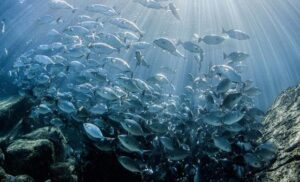
The research found that when reef habitats become less structurally complex due to rising ocean acidity, fish tend to form smaller shoals, weakening the group protection that many species rely on against predators.
“Watch a reef long enough and you realise that fish are almost never alone. They move in groups, feed in groups, and react to danger as a group,” lead author Dr Angus Mitchell said.
“For small reef fish, being part of a shoal is a survival strategy — more eyes spot predators sooner, and larger groups reduce the chance of any one fish becoming prey.”
The study showed that shoal size directly influences how fish behave individually and collectively. Fish in larger groups were generally bolder, spent more time foraging in open areas and hid less often, suggesting stronger social confidence within bigger schools.
The findings, published in the Journal of Animal Ecology, also revealed that the behavioural shifts were not primarily caused by warmer temperatures or lower ocean pH acting directly on individual fish.
“The direct effects of warming, acidification and heatwave stress on individual fish behaviour were mostly minimal,” said project leader Professor Ivan Nagelkerken.
“Across all reef types, even during a heatwave, the fish behaved in much the same way. They kept feeding and did not suddenly become more active.”
Instead, researchers said the real damage may come indirectly through the breakdown of reef habitats and social structures that shape fish behaviour over time.
Dr Mitchell said climate change impacts cannot be fully understood by studying animals in isolation.

“In the real world, fish experience climate change as part of communities shaped by their habitat and the individuals around them,” he said.
“Our results suggest that even when individual fish appear to cope behaviourally under climate stress, the social systems supporting those behaviours can quietly collapse.”
Ocean acidification, driven by the growing absorption of carbon dioxide from the atmosphere, is increasingly reducing reef complexity worldwide. As coral structures deteriorate, fish lose both shelter and the environmental conditions needed to maintain larger social groups.
To understand how future oceans may affect marine ecosystems, the researchers studied reef systems near underwater volcanic carbon dioxide seeps in Japan. These areas naturally create more acidic marine conditions similar to those scientists expect in coming decades.
“The reefs we work on in Japan are unique because volcanic CO2 seeps on the seafloor create conditions comparable to future ocean climates,” Professor Nagelkerken explained.
“Some reefs reflect present-day seawater chemistry, while others experience higher temperatures or elevated acidity — and some face both simultaneously.”
The naturally occurring “climate analogue” reefs allowed scientists to observe long-term ecological responses under realistic environmental conditions rather than laboratory simulations alone.
The study adds to growing scientific concern that climate change may alter marine ecosystems not only physically, but socially — reshaping the behaviour, survival strategies and interactions of species that depend on coral reefs.
Also Read:
Greed is driving oceans toward collapse
Aquatic plant reduces antibiotics in water and genetic damage in fish, but risks remain