
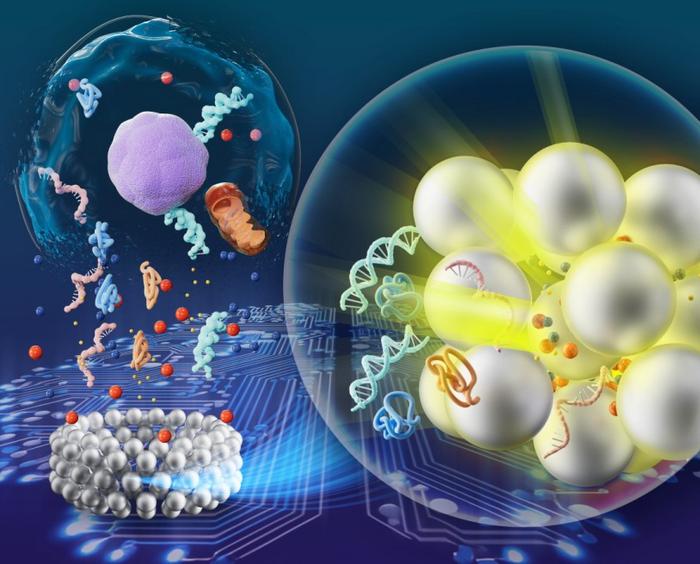
Researchers at the Chinese Academy of Sciences have developed a biosensor that can quickly detect how breast cancer responds to paclitaxel. The system, called MetaRing, analyzes tiny biological samples and delivers results in about 10 minutes. The study, published recently, points to faster, more personalized chemotherapy decisions.
A research team led by Prof. Wang Hongzhi at the Hefei Institutes of Physical Science, part of the Chinese Academy of Sciences, has developed a new diagnostic platform designed to quickly assess how breast cancer cells respond to chemotherapy drugs.
The system, named MetaRing, is a programmable plasmonic ring biosensor that identifies sensitivity to paclitaxel, a widely used chemotherapy drug in breast cancer treatment. The findings were published in Biosensors and Bioelectronics.
Rapid assessment of drug sensitivity remains a major challenge in oncology. Conventional testing methods often require extended processing times, large biological samples, and controlled laboratory conditions such as cell culture expansion. These limitations can delay treatment decisions and reduce precision in therapy selection.
The MetaRing platform aims to address these constraints by enabling fast and accurate analysis using only trace amounts of biological material. Researchers said the system eliminates the need for labeling or prolonged cell preparation, which are standard steps in many existing diagnostic workflows.
Coffee-ring effect enables stable nanostructure formation
The design of the MetaRing biosensor is based on the “coffee-ring effect,” a physical phenomenon where particles within a liquid droplet migrate to the edges as it evaporates. By carefully controlling nanoparticle concentration and evaporation temperature, the researchers achieved consistent and predictable nanoparticle assembly.
This process forms hierarchical nanostructures with tightly packed nanogaps, which are critical for enhancing signal detection. The resulting configuration improves both stability and reproducibility, allowing the sensor to function across a range of biological environments.
According to the study, the biosensor demonstrated reliable performance in water, buffer solutions, protein-rich media, and complex cell lysates. These conditions often pose challenges for traditional diagnostic tools, which can struggle with variability and signal interference.
To further enhance detection capabilities, the platform integrates surface-enhanced Raman spectroscopy, a technique that captures molecular-level signals based on vibrational energy patterns. This allows the system to generate detailed metabolic “fingerprints” of tumor cells and identify how they respond to paclitaxel exposure.
AI integration enables rapid and accurate classification
The MetaRing system combines its sensing capability with a lightweight one-dimensional convolutional neural network to interpret the spectral data. This integration allows for automated classification of drug sensitivity patterns.
In experimental testing, the platform analyzed multiple sample types, including drug-resistant breast cancer cell lines, xenograft tumor models, and patient-derived biopsy tissues. Across these scenarios, the system consistently identified sensitivity signatures linked to paclitaxel response.
The researchers reported that the platform completed drug sensitivity assessments within approximately 10 minutes. In a clinical cohort, the system achieved classification accuracy exceeding 92 percent. The figure is based on the study’s reported results and has not been independently verified by a second source.
The ability to deliver rapid and accurate results may help clinicians tailor chemotherapy regimens more effectively. Breast cancer treatment often varies significantly between patients due to differences in tumor biology, making personalized approaches increasingly important.
Potential implications for personalized cancer treatment
The research highlights the broader shift toward precision oncology, where treatment decisions are guided by patient-specific biological data. By quickly identifying whether a tumor is likely to respond to paclitaxel, clinicians may be able to avoid ineffective therapies and reduce unnecessary side effects.
Paclitaxel is commonly used in breast cancer treatment, but resistance to the drug remains a significant clinical challenge. Traditional testing approaches may not always capture the complexity of tumor behavior, particularly in heterogeneous cancer populations.
The MetaRing platform offers a potential solution by enabling rapid evaluation of tumor response at a molecular level. Its ability to work with small sample volumes also makes it suitable for clinical settings where tissue availability is limited.
Researchers said the system could help address variability between patients and support more informed treatment planning. The platform’s adaptability across different biological environments also suggests broader applications beyond breast cancer.
Study limitations and next steps
The research team noted that further validation will be necessary before the technology can be widely adopted in clinical practice. Larger studies involving diverse patient populations will be needed to confirm the system’s reliability and generalizability.
In addition, while the reported accuracy is promising, independent replication and real-world testing will be critical to establishing clinical utility. Integration into hospital workflows and regulatory approval processes will also shape the timeline for adoption.
The study presents the MetaRing biosensor as a potential step forward in rapid diagnostic technology, particularly in the context of personalized chemotherapy. Its combination of nanotechnology, spectroscopy, and artificial intelligence reflects a growing trend in biomedical innovation aimed at improving treatment precision.
Also Read:
Breast cancer cases projected to rise by nearly 40 per cent by 2050, WHO warns
Breast Cancer, cancer, cancer populations, Cancer Treatment, chemotherapy, MetaRing, neural network

New MetaRing Sensor Spots Breast Cancer Drug Response in 10 Minutes added by Arun Kumar N on
View all posts by Arun Kumar N →