
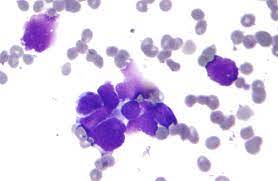
A recent study conducted by scientists working in Adelaide University and published in the journal Science Advances has shown the reason as to why certain cancers may grow and survive the body, whereas others do not. It happens that the hard mechanical stress to which the early cancer cells undergo as they are squeezed into a narrow area, causes some of the cancer cells to grow quicker, not to grow, as would otherwise be supposed.
This squeeze worked to the favor of the early breast cancer cells as scientists discovered.
The key point that was explained by the lead researcher, Professor Michael Samuel, of the Centre of Cancer Biology at Adelaide University and the Basil Hetzel Institute is that these breast cancer cells steal a particular sensor – one that our bodies rely on to sense touch – and use it to divide quickly and aid them in making their escape off the major tumour.
The process creates an indefinitely lasting mechanical memory in the breast cancer cells and it still contributes towards aggressive behaviour even after the pressure itself has been removed, Professor Samuel said.
The tumours which are solid are exposed to a lot of physical pressure when the disease is at its early stage of development, as the cancer cells grow in tissues that are limited in space, e.g. the milk ducts of the breast. Up to this day, the mechanism by which these cancer cells detect this pressure and whether or not it impacts the progression of the disease is unknown.
We have a tendency to believe that cancer is a genetic disease, but through this work we know that there is the same importance of physical forces within the tumours as the cause of cancer as there are genetic changes that cause cancer.
The researchers discovered that cancer cells respond to pressure via a molecule named PIEZO1, which is a hole in the cell that relates the interior of a cell to the exterior environment. Upon pressure stimulation, PIEZO1 enables the movement of calcium ions into the cell and subsequent signal transduction containing the Rho-ROCK pathway – a central regulator of cell movement, shape and growth.
The team demonstrated that mechanical pressure of a short duration that is obtained through compressing cancer tissue was sufficient to cause tumour growth to increase significantly. Mechanically compressed tumours in laboratory models of breast cancer became larger and the cancer cells in them fragmented faster than control groups.
In addition to promoting growth, compression was also identified to drive cancer cells into a more aggressive, invasive, state in a process known as epithelial-mesenchymal transition. When either of the PIEZO1 or the Rho-ROCK pathway had, however, been inhibited with the help of suitable drugs, compression did not propel cancer aggressiveness, making their role in this process definite.
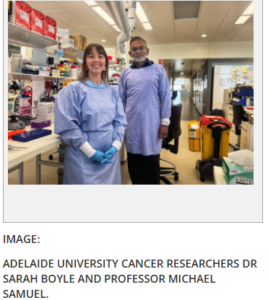
Co-lead author Dr Sarah Boyle mentioned that one of the most significant findings was that the cancer aggressiveness effects of compression remained even after removal of the force itself.
According to Dr Boyle, even relatively short durations of pressure can lead to a mechanical memory by altering the way the DNA is packed into the cell, by chemically modifying the histone proteins.
These changes, which are called epigenetic changes, are modifications of the interpretation of the DNA code by the cell, which enables the process of switching on some genes that promote tumour growth and aggressiveness.
This type of epigenetic mechanical memory offers a molecular basis to the long term effects of short term mechanical forces on the cell level of the behaviour of tumours.
Notably, the research established that PIEZO1 is over-expressed in human breast cancers compared to normal breast tissue, and that the level of PIEZO1 differs among the patients. The high PIEZO1 levels have been linked to low patient survival implying that the identical pressure-detecting system found in test animals would probably be applicable in human cancer.
The results indicate a little-known role of mechanical pressure in the development of cancer aggressiveness and represent the PIEZO1 -Rho-ROCK pathway as a possible new therapeutic objective that can be used as an early intervention.
According to the researchers, future therapies can restrict tumour growth and invasiveness by interfering with the sensory and response of cancer cells to mechanical pressure. The results can also be applied in diagnosing the patients who are susceptible to aggressive breast cancers due to excessively high concentrations of PIEZO1.
That work has opened up a whole new field of so-called mechanotherapy – the use of treatments that disrupt the mechanical signals that tumours are dependent on to develop and spread out, as cancers grow to be mechanically responsive diseases, said Professor Samuel.

How being squeezed contributes to risk of breast cancer cells added by Arun Kumar N on
View all posts by Arun Kumar N →