
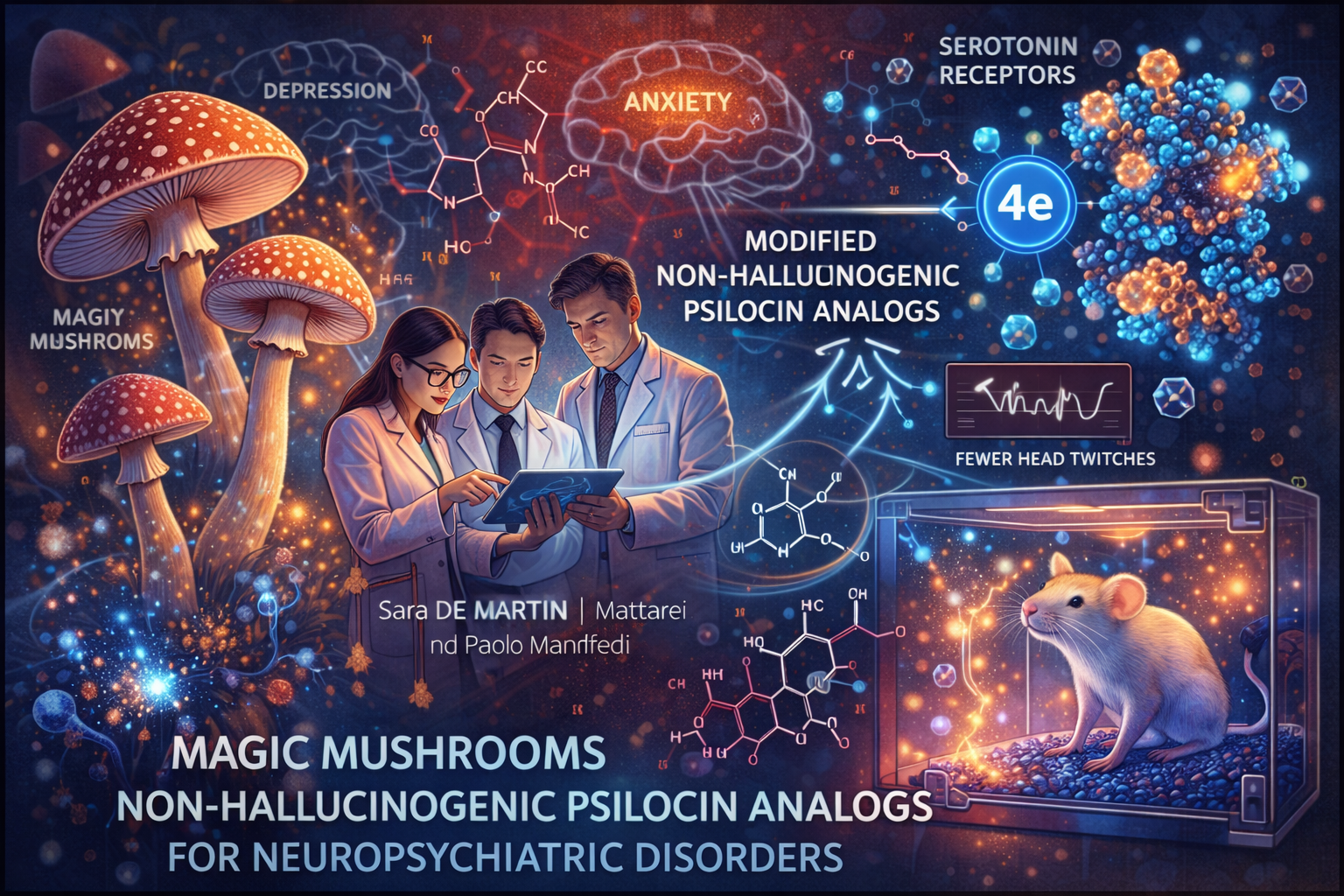
The psychoactive substance of magic mushrooms, psilocybin, is under scientific scrutiny as being useful in the treatment of neuropsychiatric disorders such as depression, anxiety, substance use disorder and some neurodegenerative diseases. It can be limited to broader therapeutic uses, however, by the hallucinogenic effects. A study on the effects of psilocin, the active compound in psilocybin, on mice published in the Journal of Medicinal Chemistry by researchers synthesized modified versions of psilocin which preserve its properties but have fewer hallucinogenic-like effects than pharmaceutical-grade psilocybin.
In line with the emerging scientific view that psychedelic and serotonergic works can be decoupled, one correspondent author of the study, Andrea Mattarei, states that their findings align with this emerging school of thought. This creates the prospect of developing new therapies that are more biologically active but less hallucinogenic, which might allow developing safer and more practicable treatment options.
Mood disorders as well as certain neurodegenerative ailments such as the Alzheimer disease entail an imbalance of the neurotransmitter molecule serotonin that aids in controlling moods and other brain processes. Psychedelics have been studied to have therapeutic effects against serotonin-signaling pathways in decades by scientists. But the hallucinations that can be used along with these drugs can cause people to fear their use even in case there is a medical advantage.


Brain Image (NIH)
Therefore, a group supervised by Sara De Martin, Mattarei and Paolo Manfredi chemically engineered 5 psilocin analogs to release gradually, slowly and possibly non-hallucinogenic into the brain. The initial test of the five compounds was conducted using human plasma samples and the laboratory parameters that replicate gastrointestinal absorption. These tests have enabled the group to determine a compound they refer to as 4e as the best prospect since it exhibited desirable stability to be absorbed and allowed a slow release of psilocin – a trait that has the potential to reduce the effects of hallucinations. Notably, 4e was also active at major serotonin receptors, and at similar levels as psilocin.
The researchers then compared the impact of the same dosage of 4e on mice with pharmaceutical quality psilocybin. The team orally gave the compounds to mice and assessed the degree to which psilocin was absorbed by the bloodstream and the brain after 48 hours. The compound had the capability of penetrating the blood-brain barrier in mice treated with 4e and had a lower yet more prolonged presence of psilocin in their brain than did their psilocybin-treated counterparts. In examining the behavior of the mice, the researchers found that the 4e-treated mice had reduced the number of head twitches, a well-established oral psychiatric effect of psychedelics in rodents, with the 4e-treated mice compared to those treated with psilocybin having far fewer head twitches. This difference in behavior seemed to be linked with the quantity and the time that psilocin was released in the brain.
According to the researchers, the results of their experiments testify to the possibility of creating stable derivatives of psilocin penetrating the brain and preserving the function of serotonin receptors without acute psychotropic effects. Their mechanism of action and complete description of their biological effects will require further research before their therapeutic capacity and safety in human beings are evaluated.
The authors admit MGGM Therapeutics, LLC. funding in partnership with NeuroArbor Therapeutics Inc. Some of the authors state that they are patent holders regarding psilocin.