

A Cook County grand jury has indicted a 19-year-old Illinois man accused of planning a mass shooting involving a Hindu temple in the Chicago suburbs, bringing a case that alarmed Indian American worshippers into a new legal phase.
CBS Chicago reported on November 9 that Alexandros Paporakis of Palatine was indicted on one count of making a terrorist threat and one count of unlawful use of a weapon. He remained in custody awaiting trial, with arraignment scheduled for November 19, according to the report.
An indictment is a formal accusation, not a finding of guilt. The allegations have not been proven at trial, and the defendant is entitled to the presumption of innocence.
What investigators allege
According to accounts of statements by police, prosecutors and the FBI, investigators received information from people who worked with Paporakis about threats directed at Indian people and a Hindu temple in Aurora. Authorities said electronic communications and surveillance information formed part of the investigation.
Police reported that a vehicle associated with the suspect entered the parking lot of a large Hindu temple in Aurora on October 11 and later left. Investigators also said a co-worker reported that Paporakis described an attempted attack in which a firearm malfunctioned. Those accounts are allegations and should not be treated as independently established events.
Police said a search of the suspect’s home yielded a rifle, loaded magazines, additional ammunition, tactical equipment and material associated with white supremacist extremism. Authorities also described an eight-page manifesto expressing hatred toward non-white people, particularly Indians.
The details matter because the alleged motivation is central to whether the case may be investigated or prosecuted as bias-motivated violence. But investigators have not publicly identified the specific temple as a confirmed target, and the available reporting does not establish a federal hate-crime charge.

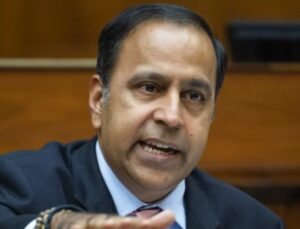
Raja Krishnamoorthy
Warning from a co-worker
The case also illustrates the potential significance of reporting threats before violence occurs. According to police and prosecutors, co-workers became concerned about statements and messages attributed to Paporakis and contacted authorities. Investigators arrested him outside his home on October 11.
The chronology is important: the alleged planning and arrest took place in October. The fresh news in the current reporting window is the November 9 grand jury indictment, not a new attempt at the temple this week.
US Representative Raja Krishnamoorthi said he and his family worship at the temple he believed was targeted and that they had been present during the relevant religious observance, CBS reported. He called for investigation of the alleged plot as a hate crime. His account underscores the personal significance of the case for the region’s Hindu community, but it does not substitute for investigators’ identification of the intended site.
Legal and community implications
Religious institutions frequently rely on volunteers and community networks to maintain welcoming spaces. A credible threat can require them to balance openness with precautions such as emergency planning, coordination with local police and procedures for reporting suspicious conduct.
Those measures are relevant beyond any single congregation. Indian American families often travel considerable distances to major temples for festivals, classes and community gatherings. Threats against a place of worship can affect people who were never directly approached by the accused.
The indictment provides an opportunity to examine how state and federal authorities coordinate in cases involving alleged extremist ideology and threats to religious communities. CBS reported that federal charges had not been filed at the time of its November 9 article, although the FBI had not ruled them out.
The next key event is the scheduled arraignment. Subsequent court filings may clarify the evidence, charges and defence response. Reporting should follow those records rather than assume the allegations will be established.