
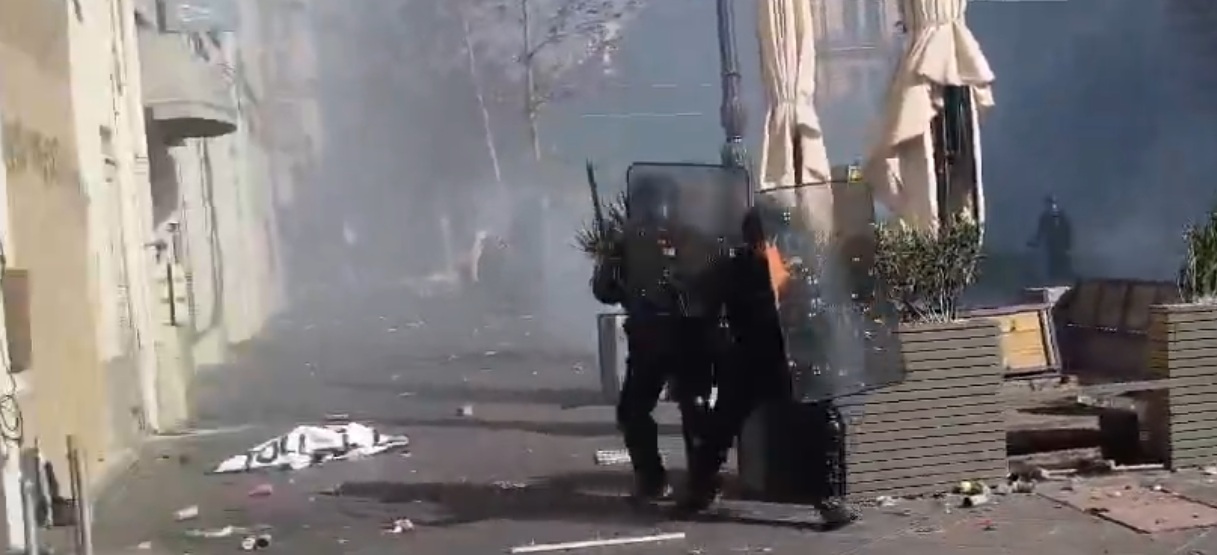
France’s nationwide protests have escalated into violent clashes, looting and arson, raising concerns for Indians living, studying or travelling in the country. However, there is no verified evidence in the reporting reviewed that Indian nationals have played a significant organising role in the demonstrations or been specifically targeted in the unrest.
The demonstrations intensified over the weekend of October 17-18, with protesters taking to the streets over rising living costs, deteriorating school conditions and public services, and proposed budget cuts. Clashes with security forces and violence by groups operating on the sidelines of demonstrations turned parts of the movement into a wider public-order crisis.
French authorities reported more than 2,400 arrests following the unrest, while nearly 1,000 police officers were injured, according to Reuters’ October 18 report. Businesses were looted, public buildings damaged and the historic town hall in Limoges was set on fire. The scale of the violence prompted President Emmanuel Macron to call for calm and condemn rioting.
Protests in France have turned completely violent over the cost of living 🤯 https://t.co/V7tbV2vQTU
— Daily Loud (@DailyLoud) October 17, 2026
For Indians in France, the immediate concerns are personal safety, access to transport and essential services, and the possibility of encountering demonstrations while commuting or travelling.
Indians may be affected in different ways depending on where they live and work. Students could face disruptions to classes or public transport, employees may encounter difficulties commuting, and tourists could find access to attractions, shopping districts and transport hubs restricted.
These are potential effects of the unrest, though Indian nationals have not been directly affected.
Transport disruption and safety concerns
The protests have led to road closures, police operations and temporary restrictions on public transport in affected areas. Earlier demonstrations by high-school students also prompted temporary suspensions of public transport in several cities, including Strasbourg, Orléans, Nice, La Rochelle and Marseille, according to French media reporting.
In Paris, demonstrations have resulted in station closures and diversions on some bus routes. The exact impact varies by location and date, making it important for residents and visitors to check current service information before travelling.
The unrest also presents risks beyond transport delays. Looting, fires, clashes with police and damage to commercial properties can make some streets unsafe even when demonstrators have dispersed. Indian residents and visitors should avoid protest routes, police cordons and gathering crowds, and follow instructions issued by local authorities.
There is also a risk of misinformation. Images of clashes or damaged buildings circulating online may be from different locations or earlier incidents. Reports of Indian nationals being attacked, arrested or involved in violence should be treated as unconfirmed unless supported by credible reporting or official statements.
What Indian nationals should do
Indian nationals in France should monitor local police announcements, transport operators and official advisories before travelling through affected areas. Those staying in hotels or student accommodation should check with their hosts or institutions about local restrictions and alternative routes.
People caught near a demonstration should move away from the crowd rather than attempting to film clashes at close range. They should avoid confrontations, follow police instructions and keep their passports and essential contact details accessible.
Indians who encounter an emergency should contact French emergency services. Anyone who is arrested, injured or unable to contact family may also seek consular assistance through the Embassy of India in Paris or the Consulate General of India in Marseille, depending on their location.
The Indian Embassy’s official website lists its announcements and advisories at https://www.eoiparis.gov.in/page/common_announcement_advisories.
The wider implications for Indians
France is an important destination for Indian students, professionals, tourists and business travellers. Prolonged unrest can affect daily life even when there is no direct threat to a particular nationality.
The present situation also underlines the need to separate the causes of the demonstrations from the violence that has accompanied some of them. The protests reflect domestic disputes over living costs, education, public services and government policy. The evidence reviewed does not establish that the Indian community is a central actor in those disputes.
For India’s diaspora, the immediate priority is to remain informed, avoid areas experiencing unrest and verify reports before sharing them. The extent of any direct impact on Indian nationals will become clearer if French authorities or Indian diplomatic missions release specific information about affected citizens.