

In 2009, a cemetery, located directly outside of Chicago, revealed a scandal. The employees at the Burr Oak Cemetery in Alsip, Illinois had been accused of digging up aged graves, shifting the remains to other places within the cemetery and selling the burial plots back. One such piece of evidence was a small knot of moss when the case went to trial in 2015.
Researchers have published the original full scientific account of the case in a new article in the journal Forensic Sciences Research where it is described how exactly moss was used to find that a crime had been committed.
The lead author of the paper, Matt von Konrat, the head of the botany collections at the Field Museum in Chicago, is a follower of detective programs on television (the new paper is called Silent Witness on the BBC), but he never thought that his work would bring him into a criminal case scenario. Around 2009, von Konrat received a call on the phone, which happened to be the FBI, inquiring whether she could assist in identifying a few plants, says von Konrat. The FBI appeared at the Field Museum and gave von Konrat a piece of moss which was discovered eight inches under the earth, and the recovered human remains at the cemetery.
What sort of moss it was, and how long it had been lying in the soil, they wanted to know.
First, von Konrat and his associates had looked at the moss under a microscope and compared it with dried moss specimens in museum collections to conclude that it was taxifolius Fissidens, which is also referred to as a common pocket moss. According to von Konrat, they conducted a survey of the various types of mosses found in different locations around the site of the crime and that type of moss was not present in the area. However, examining the remainder of the cemetery we discovered a large colony of that form of moss growing in the same spot where the investigator thought that the bones had been disturbed.
The investigators did not only require the species of the moss, however, they were also concerned about its age. The defendants to the case argued that someone must have exhumed the bones and reburied them at a later time prior to the defendants commencing working in the cemetery. As the moss was buried with the re-buried bones, the length of time that the moss had been under the ground would be used to help prove the date that the bones were reburied.
“Moss,” says von Konrat, “is a bit of a freak. Mosses are intriguingly physiologically regulated so that although they may be dry and lifeless and preserved, still they may have an active metabolism and some active cells. The level of metabolic activity decays with time, and that would inform us about when a moss sample was harvested.”
The metabolic activity of a plant may be determined by its chlorophyll – the green color that is used to photosynthesize the food. The chlorophyll in the cells of plants deteriorates as they die and more of the cells of plants lose the ability to perform their functions. The authors of the research determined the quantity of the light captured by chlorophyll of the moss specimens in known ages, including fresh and those that have been stashed in the museum collections over the past 14 years. Then they repeated the same test on the moss that was picked at the crime scene. The researchers concluded that the evidence moss was no more than a year or two old- which helped the case against the cemetery employees who in 2015 were finally found guilty of desecrating human remains.

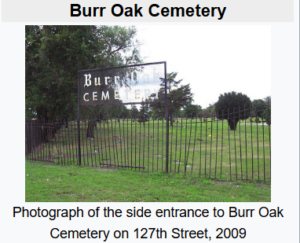
https://en.wikipedia.org/wiki/Burr_Oak_Cemetery
“Occasionally, there are also cases when the FBI only has to summon experts to assist in the gathering of evidence, conduct analyses, submit the evidence to the prosecutors and testify to their efforts should a conviction be required. Burr Oak Cemetery case was one of those cases when we approached the Chicago Field Museum Botanical Program, which happened to be of invaluable help since plant material within the cemetery provided the key to charge four individuals and convict them,” says Doug Seccombe, a former FBI agent and worked on the case, as well as, a co-author of the new paper.
Von Konrat has been consulted after the Burr Oak Cemetery case on a number of moss cases. However, these cases are quite few in the field of forensic science: in 2025, he and some of his co-authors released another article, looking into the application of mosses and other bryophyte plants as forensic evidence. It was only within the last century that they had discovered a dozen-odd examples.
“Mosses are usually underrated and that is how we hope our research will help to create awareness that there are other groups of plants out there other than flowering plants and they play a very crucial role in society and around us. However, most to the point, we wish to mention this microscopic group of plants as a law enforcement tool. Should we find the means of raising mosses as possible evidence, perhaps this might prove of service to some families in the future.”