
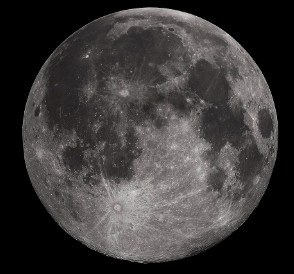
An international team of scientists reported on April 7, 2026, that water on the Moon likely accumulated gradually over billions of years rather than from a single event. The study, published in Nature Astronomy, points to permanently shadowed craters near the lunar south pole as the most likely reservoirs of ice. Using data from NASA missions and simulations, researchers identified older craters as prime targets for future exploration and resource use.
For decades, scientists have known that water may exist on the Moon. What remained unclear was how it got there and why it appears unevenly spread across the surface.
A new study published April 7 in Nature Astronomy offers a clearer picture. The research suggests that lunar water did not arrive in a single dramatic event, such as a comet impact, but instead accumulated slowly over billions of years.
The study was led by Oded Aharonson of the Weizmann Institute of Science, with contributions from Paul Hayne at the University of Colorado Boulder and collaborators including Norbert Schörghofer. Their findings draw on years of observations and modeling to explain one of lunar science’s longest-standing questions.
Lunar south pole ice locations and cold traps explained
Evidence of water on the Moon has come primarily from missions led by NASA, including the Lunar Reconnaissance Orbiter. Instruments aboard the spacecraft detected signals consistent with ice inside deep craters near the Moon’s south pole. These craters, known as “cold traps,” remain in permanent shadow and can preserve ice for billions of years.
Observations from the orbiter’s Lyman Alpha Mapping Project instrument indicated that ice is not evenly distributed. Some craters appear rich in ice, while others show little to none. That patchy pattern has puzzled scientists for years.
The new study attempts to explain that uneven distribution by looking back at the Moon’s geological history. The researchers combined temperature data from the orbiter’s Diviner instrument with computer simulations that reconstructed how the Moon’s orientation has shifted over time.
The Moon’s tilt relative to Earth has not always been constant. As it shifted, craters that are permanently shadowed today may once have received sunlight, while others remained dark for much longer periods. This variation appears to have influenced where ice could accumulate and persist.
“It looks like the moon’s oldest craters also have the most ice,” Hayne said, noting that this pattern suggests a slow and continuous buildup of water over as much as 3 to 3.5 billion years.
How water may have formed and accumulated on the Moon
The study does not identify a single source of lunar water, but it narrows down the likely mechanisms. Researchers ruled out the idea that most of the Moon’s water arrived in one large delivery, such as a massive comet impact.
Instead, multiple processes likely contributed over time. Volcanic activity in the Moon’s distant past may have released water from its interior. Comets and asteroids could have delivered additional water through smaller impacts. Hydrogen from the solar wind may also have reacted with oxygen in lunar soil to form water molecules.
“Through the solar wind, a constant stream of hydrogen bombards the moon, and some of that hydrogen can be converted to water on the lunar surface,” Hayne said.
The researchers found that the craters that have remained in shadow the longest are also those most likely to contain ice today. One example is Haworth Crater near the Moon’s south pole, which may have been in continuous darkness for more than 3 billion years.
These findings could guide future lunar missions. Identifying where ice is most likely to be concentrated can help scientists and engineers plan landing sites and exploration strategies.
Water on the Moon is not just a scientific curiosity. It has practical implications for long-term human exploration. Ice deposits could be mined for drinking water, breathable oxygen and even rocket fuel by separating hydrogen and oxygen atoms.
“Finding water beyond Earth in liquid and usable form is one of the most important challenges in astronomy,” Aharonson said in a statement released by his institute.
Future missions aim to confirm lunar ice deposits
The study highlights the need for direct sampling to confirm the origin and distribution of lunar water. Observational data and simulations can narrow possibilities, but they cannot fully resolve the question.
Hayne and his colleagues are working on a new instrument, the Lunar Compact Infrared Imaging System, designed to study surface ice in greater detail. The instrument is expected to be deployed near the Moon’s south pole around 2027 as part of upcoming missions.
“Ultimately, the question of the source of the moon’s water will only be solved by sample analysis,” Hayne said. “We will need to go to the moon to analyze those samples there or find ways to bring them from the moon back to Earth.”
As space agencies and private companies accelerate plans for lunar exploration, the findings provide a clearer map of where to look. The Moon’s darkest craters, once seen as inaccessible voids, are emerging as some of the most valuable real estate beyond Earth.
Also Read:
What are the conditions suitable for life on distant moons
Artemis II Mission Launch: NASA Sends Crew on First Moon Flyby in 50 Years

Water on the moon? New Study Identifies South Pole Craters As Key Ice Locations Over Billions added by Arun Kumar N on
View all posts by Arun Kumar N →