
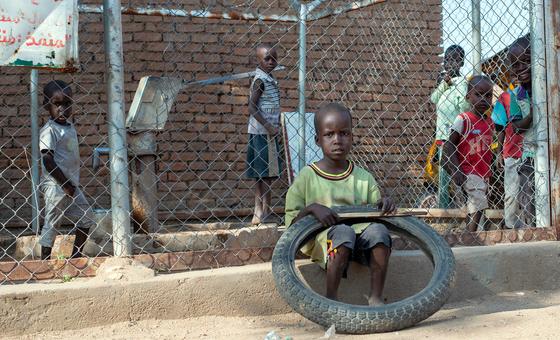
A new United Nations report has documented widespread atrocities in Sudan’s Darfur region, accusing fighters from the Rapid Support Forces (RSF) and allied militias of carrying out mass killings, sexual violence and other grave abuses during an assault on the city of El Fasher.
The findings, released by the UN human rights office, highlight what investigators describe as a systematic pattern of violence against civilians during the ongoing conflict between Sudan’s national army and the RSF militia.
War In Sudan Enters Third Year
Sudan has been engulfed in a brutal power struggle for nearly three years, with fighting between the Sudanese Armed Forces (SAF) and the RSF spreading across large parts of the country.
Darfur, a region already scarred by earlier conflicts, has once again become one of the epicentres of violence. The UN report focuses particularly on the RSF’s offensive against El Fasher, the capital of North Darfur, which has been under siege.
According to UN High Commissioner for Human Rights Volker Türk, the lack of accountability for past abuses continues to fuel fresh cycles of violence.
“Persistent impunity fuels continued cycles of violence,” Türk said, urging credible investigations and justice for those responsible for the latest atrocities.
Mass Killings And Targeted Attacks
Based on hundreds of interviews conducted with survivors and witnesses in late 2025, UN investigators documented more than 6,000 killings during the first three days of the RSF offensive on El Fasher.
The report cautions that the actual death toll is likely far higher, as the assault continued for weeks and access to some areas remained restricted.
Investigators recorded multiple incidents of mass violence. In one of the most devastating attacks, RSF fighters reportedly opened fire with heavy weapons on a large group of civilians seeking shelter at Al-Rashid dormitory within El Fasher University.
Around 1,000 people had gathered there for safety on October 26, but witnesses said roughly 500 were killed when the fighters began firing indiscriminately.
One witness described the aftermath as resembling “a scene out of a horror movie,” recounting how bodies were thrown into the air by the blasts.
Ethnic Targeting And Summary Executions
The report also documents a series of summary executions carried out inside El Fasher.
According to witnesses, RSF fighters targeted young boys and men under the age of 50, accusing them of collaborating with Sudanese government forces or allied militias.
In many cases, investigators said the accusations appeared to be based largely on ethnicity. Members of non-Arab communities, particularly those from the Zaghawa ethnic group, were reportedly singled out during searches and arrests.
Civilians who were injured or otherwise unable to fight—individuals considered hors de combat under international humanitarian law—were also among those targeted, the report states.
Widespread Sexual Violence Reported
Survivors interviewed by UN investigators described repeated incidents of rape, gang rape and other forms of sexual violence during the assault.
Women and girls from Zaghawa and other non-Arab communities appeared to be particularly vulnerable.
Witnesses recounted cases in which victims were abducted and held for ransom, with sexual violence used as a tool of intimidation and coercion. In other instances, women were assaulted during invasive body searches carried out by armed fighters.
The report also documents cases of torture, forced disappearances, arbitrary detention and the recruitment of children to take part in hostilities.
Possible Crimes Against Humanity
Human rights officials say the pattern of abuses seen in El Fasher resembles earlier attacks carried out by RSF forces in other parts of Darfur during the war.
One such episode occurred at the Zamzam displacement camp in April 2025, where investigators also documented large-scale violence against civilians.
According to the UN report, the scale and organisation of these attacks suggest they may form part of a deliberate campaign targeting civilian populations.
“The acts of violence knowingly committed as part of such an attack would amount to crimes against humanity,” the UN human rights office said.
Calls For Accountability And Mediation
Türk urged all parties involved in the conflict to ensure that forces under their command immediately cease violations of international law.
He also called on countries with influence over the warring factions to help prevent further atrocities, including by respecting existing arms embargoes and halting the flow of weapons into the conflict.
The UN human rights chief stressed the need for stronger international support for mediation efforts aimed at securing a ceasefire and reviving political dialogue.
“In a protection crisis of this scale, human rights must remain central to efforts to achieve a durable resolution of the conflict,” he said.
As fighting continues across Sudan, humanitarian agencies warn that millions of civilians remain trapped in one of the world’s most severe and rapidly worsening crises.
crimes, Fasher, horror, movie, report, scene, Sudans, war, warns

‘Like a scene out of a horror movie’: UN report warns of war crimes in Sudan’s El Fasher added by Arun Kumar N on
View all posts by Arun Kumar N →