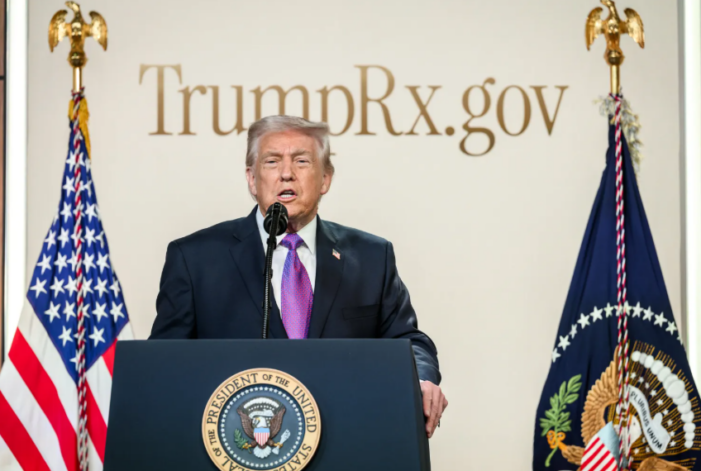
The unfolding drama in the Persian Gulf is just baffling the pundits around the world. Just yesterday, US President Donald Trump took to Truth Social and dropped a bombshell that should have every strategist in Washington squirming. “The United States knew nothing about this particular attack,” he wrote, referring to Israel’s audacious strike on Iran’s South Pars gas field.
“The country of Qatar was in no way, shape, or form, involved with it, nor did it have any idea that it was going to happen.” Iran, he added, retaliated “unjustifiably and unfairly” against Qatar’s LNG facilities. And then came the thunder: if Tehran hits Qatar again, America will “massively blow up the entirety of the South Pars Gas Field at an amount of strength and power that Iran has never seen.
”This is not some routine tit-for-tat. South Pars, the world’s largest natural gas field, shared with Qatar’s North Dome, accounts for 70-75 per cent of Iran’s total gas production. It pumps out record volumes, over 727 million cubic metres a day at its peak, powering Iranian homes, industries and, crucially, the regime’s ability to fund its proxies.
Israel hit its processing plants at Asaluyeh on 18 March, knocking out phases that handle nearly 20 per cent of capacity in one surgical blow. Fires raged. Production halted. Oil prices promptly jumped over 5 per cent, Brent crossing $110 a barrel.
From Regime Change to Oil Depletion
Here’s the rub. The Iran war, which kicked off on February 28, with massive US-Israeli strikes that reportedly took out key Iranian leadership – was supposed to be under American management. Nuclear sites, missile batteries, command centres: that was the playbook. But Israel has quietly shifted the battlefield to Iran’s economic jugular. And Washington is left scrambling, publicly claiming ignorance while privately coordinating, then forced to issue threats that tie America’s hands deeper into the mess.
Trump’s own words expose the control slip. He insists Israel “violently lashed out” out of anger and has now been told “NO MORE ATTACKS” on South Pars unless Iran escalates on Qatar. Yet multiple American and Israeli sources confirm the strike was pre-cleared with the White House. The contradiction screams louder than any missile: even a staunchly pro-Israel president like Trump feels compelled to distance himself publicly. Why? Because the strike risked dragging America’s key Gulf ally, host to the massive Al Udeid airbase with 10,000 US troops and CENTCOM’s forward headquarters, straight into the line of fire.
Iran’s tit-for-tat expected?
Tehran’s Revolutionary Guards fired on Qatar’s Ras Laffan LNG hub, the planet’s biggest liquefied natural gas export terminal, causing “extensive damage.” Saudi and UAE sites faced drone and missile barrages too. Iran’s President Masoud Pezeshkian warned of “uncontrollable consequences that could engulf the entire world.” The Guards vowed “powerful action” against Gulf energy infrastructure. Qatar expelled Iranian attaches. Global LNG markets trembled.
above, this is classic Israeli strategic genius at work, manipulating the superpower for a long-term benefit. Benjamin Netanyahu has never minced his words: not just degrade Iran’s nuclear and missile threat, but “eradicate the Iranian regime” and create conditions for the Iranian people to “cast off tyranny.” Hitting South Pars does precisely that. It chokes Iran’s domestic energy supply, spikes inflation, breeds public anger, and starves the cash flow that arms Hamas, Hezbollah and the Houthis.
Israel Achieves Strategic Depth
Meanwhile, America gets pulled in as the reluctant firefighter. US bases in Qatar, Saudi Arabia and the UAE are now on high alert. Global oil and gas prices threaten inflation waves that hit every American wallet and, closer home, every Indian importer reliant on Gulf crude. Trump’s warning is no bluff; it commits US firepower directly. But notice the fine print: “with or without the help or consent of Israel.” Washington is now the enforcer cleaning up after Jerusalem’s move.
One cannot overlook the pattern. From Gaza to Lebanon to now Iran’s gas fields, Netanyahu has repeatedly pushed boundaries – Rafah operations despite Biden’s red lines, targeted killings that risked wider war. US aid keeps flowing: $3.3 billion in annual military financing, plus hundreds of millions more in wartime supplements, on top of the historic $300 billion-plus adjusted total. Israel enjoys the qualitative military edge and the political cover. Yet it operates with a free hand, knowing America’s strategic interests with stable Gulf allies, secure energy flows, containing China-Russia influence will compel Washington to backstop the fallout.
Israel’s calculation is cold and brilliant. By striking a field literally shared with Qatar, it ensured any Iranian reply would hit a US partner. Tehran takes the bait, Qatar screams, Trump threatens Armageddon on South Pars. Result? Iran’s economy bleeds further, Gulf states lean harder on America for protection, and Israel emerges as the region’s indispensable security guarantor. The tail is wagging the dog.
The South Pars episode proves the superpower no longer calls every shot. As Trump himself had to admit ignorance and then pledge massive retaliation, the control is slipping. For the rest of us watching from afar, whether in Delhi, Riyadh or Brussels, the lesson is stark. Alliances are tools, not chains. Israel has mastered turning its biggest patron into an unwitting co-author of its grand strategy.
The Middle East war is no longer contained, and America is paying the price both in terms of treasure, credibility and stability in the Gulf. The question now is whether Washington will finally reassert command, or not.
america role, gas field under attack, iran – irael war, israel design, long term impact, middle east war, trump message, truth social, us interests denied