
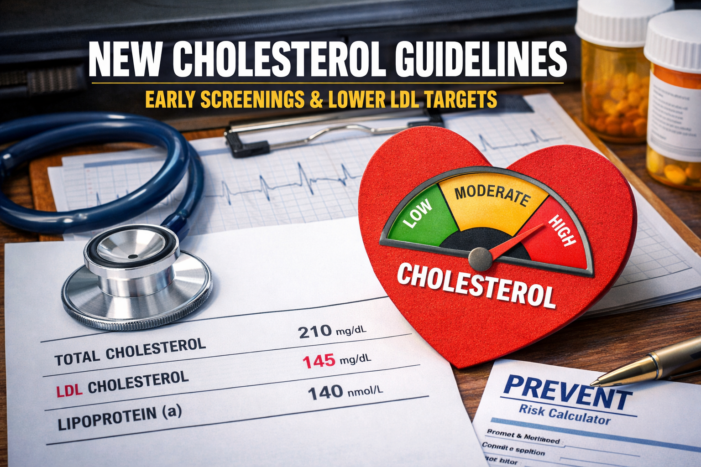
U.S. cardiology groups have released updated cholesterol guidelines for the first time since 2018, urging earlier screening and more aggressive LDL reduction. The recommendations, published in leading medical journals and presented March 28 in New Orleans, aim to curb cardiovascular disease by identifying risk sooner and tailoring treatment. Doctors say the changes could shift prevention strategies toward younger adults and high-risk groups.
A routine cholesterol test may soon come earlier in life for millions of Americans.
The American College of Cardiology and the American Heart Association have updated their joint clinical guideline on cholesterol management, marking the first revision since 2018 [1]. The guidance was published in the Journal of the American College of Cardiology and Circulation, with a formal presentation scheduled for March 28 at the cardiology group’s annual scientific session in New Orleans
At its core, the update pushes for earlier screening, lower targets for low-density lipoprotein cholesterol, and a more individualized approach to assessing cardiovascular risk.
Early cholesterol screening recommendations and family risk focus
The new guideline emphasizes screening people sooner, especially those with a family history of heart disease or inherited lipid disorders.
For individuals with familial hypercholesterolemia, a genetic condition that causes very high LDL cholesterol, screening is now recommended as early as age 9 or younger [1]. The shift reflects growing evidence that cardiovascular risk can begin decades before symptoms appear.
“We know that lower LDL cholesterol levels are better when it comes to reducing the risk of heart attacks, strokes and congestive heart failure,” said Roger S. Blumenthal, who chaired the guideline writing committee [1].
The update also calls for a one-time measurement of lipoprotein(a), or Lp(a), a genetically influenced lipid linked to elevated heart disease risk. Levels above 125 nanomoles per liter are associated with about a 40 percent higher risk, with risk doubling at higher concentrations, according to the guideline
PREVENT risk calculator replaces older model for long-term prediction
A major change in the guideline is the introduction of a new risk assessment tool called Predicting Risk of Cardiovascular Disease Events, known as PREVENT.
The calculator estimates both 10-year and 30-year risks for heart attack and stroke, expanding on the previous pooled cohort equation that focused mainly on 10-year outcomes in adults over 40.
PREVENT incorporates additional health indicators, including blood sugar and kidney function, offering a broader picture of cardiovascular risk. It draws on data from 6.6 million individuals, compared with about 26,000 used in the earlier model
The tool is recommended for use starting at age 30, signaling a shift toward earlier intervention.
“Shifting the paradigm toward proactive prevention strategies earlier in life can meaningfully change the trajectory of cardiovascular disease,” said Seth Martin, a member of the writing committee [1].
Lower LDL cholesterol targets and expanded treatment options
The guideline sets more aggressive LDL cholesterol targets depending on a patient’s risk level.
For people without cardiovascular disease, optimal LDL levels remain below 100 milligrams per deciliter. Those at intermediate risk are advised to aim below 70 milligrams per deciliter, while high-risk individuals should target levels under 55 milligrams per deciliter.
These thresholds reflect a growing consensus that “lower is better” when it comes to LDL cholesterol.
The recommendations also expand treatment options beyond statins, the longstanding first-line therapy. Additional medications include ezetimibe, bempedoic acid and PCSK9 inhibitors, injectable drugs used when statins alone are insufficient
Clinicians are encouraged to tailor treatment plans based on individual risk profiles, rather than relying on a one-size-fits-all approach.
Broader definition of cardiovascular risk and “risk enhancers”
The updated guideline introduces a wider set of “risk enhancers” to refine decision-making.
These include chronic inflammatory conditions such as rheumatoid arthritis, pregnancy-related complications like preeclampsia, and early menopause. Family history and ancestry also factor into risk calculations.
Doctors may use additional tests to guide treatment decisions for patients with borderline or intermediate risk. These include measuring high-sensitivity C-reactive protein, a marker of inflammation, and coronary artery calcium scans to detect plaque buildup in arteries
The guidance also addresses specific populations, including pregnant or lactating women, older adults over 75, and patients with conditions such as diabetes, chronic kidney disease, HIV infection or cancer.
Lifestyle remains central to prevention strategy
Despite advances in testing and treatment, the guideline reinforces longstanding advice on lifestyle.
Healthy eating, regular physical activity, avoiding tobacco, maintaining a healthy weight and getting enough sleep remain foundational to managing cholesterol levels.
Blumenthal noted that 80 percent to 90 percent of cardiovascular disease is linked, at least in part, to modifiable risk factors
That statistic underscores the continued importance of prevention strategies that begin outside the clinic.
A shift toward earlier intervention in cardiovascular disease
The update arrives as cardiovascular disease remains the leading cause of death in the United States. About one in four U.S. adults has elevated LDL cholesterol, a major contributor to atherosclerosis, the buildup of plaque in arteries that can lead to heart attack or stroke
By focusing on earlier screening and long-term risk, the guideline signals a shift in how clinicians approach prevention.
Instead of reacting to disease in midlife or later, the new approach aims to identify risk earlier and intervene sooner.
For patients, that may mean discussing cholesterol levels and heart health well before symptoms appear.
Als0 Read:
Fatty fish, camelina oil good for HDL, IDL cholesterol: study
High salt intake associated with doubled risk of heart failure
cholesterol guideline update, HDL cholesterol, heart disease, LDL cholesterol, LDL cholesterol targets

Doctors Say Start Screening Cholesterol Earlier. Here’s What Changed added by Sridhar P on
View all posts by Sridhar P →