
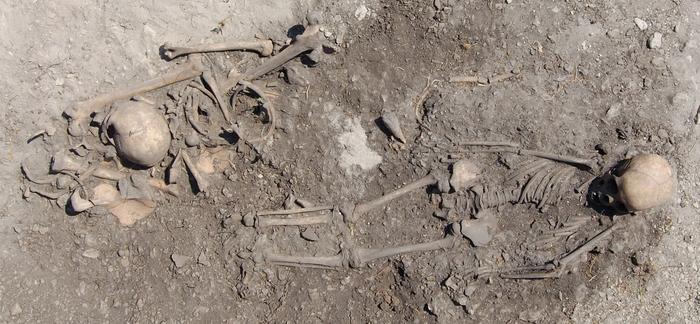
In the windswept landscapes of Gotland, Sweden’s largest island, archaeologists have long puzzled over the burial practices of a 5,500-year-old hunter-gatherer community. Now, a groundbreaking DNA study from Uppsala University is rewriting our understanding of these ancient people, revealing not just who was buried with whom, but hinting at a sophisticated grasp of family lineages that extended far beyond parents and siblings.
The findings, drawn from four shared graves at the Ajvide site, suggest these Stone Age inhabitants placed deep value on distant relatives from cousins, aunts, to great-aunts, challenging assumptions about prehistoric social structures. The Ajvide burial ground, nestled on Gotland in the Baltic Sea, stands as one of Scandinavia’s premier Stone Age treasures. Discovered decades ago, it boasts 85 known graves filled with artifacts from a culture that thrived on seal hunting and fishing, even as farming swept across southern Europe.
These people, part of the Pitted Ware Culture (PWC), remained genetically distinct from emerging agricultural societies, clinging to a nomadic lifestyle amid a changing world.What sets Ajvide apart are its multiple-occupancy graves, eight in total, each holding two or more individuals.
Four Graves but Surprising Findings
Researchers zeroed in on four of these for their latest analysis, extracting DNA from teeth and bones to map out kinship. The results, published in a peer-reviewed journal, paint a picture of deliberate burials where blood ties mattered, but not always in the ways we’d expect.Take Grave 1: A 20-year-old woman lay flanked by two young children, a four-year-old boy and a one-and-a-half-year-old girl. At first glance, it screams maternal bond.
But the DNA tells a different story. The kids were full siblings, sharing half their genetic material, yet the woman wasn’t their mother. Instead, she was likely their paternal aunt or half-sister, a second-degree relative.
“Surprisingly enough, the analysis showed that many of those who were buried together were second- or third-degree relatives, rather than first-degree relatives,” explained Helena Malmström, the archaeogeneticist who designed the study. “This suggests that these people had a good knowledge of their family lineages and that relationships beyond the immediate family played an important role.”
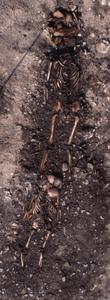
Grave 2 offered another twist: A teenage girl buried beside an adult man, whose remains appeared relocated from elsewhere. Genetic testing confirmed he was her father, a rare direct parent-child link in these shared plots. Then there’s Grave 3, with two children, a boy and a gir, interred together. No siblings here; they shared just an eighth of their DNA, pointing to third-degree kin like cousins.
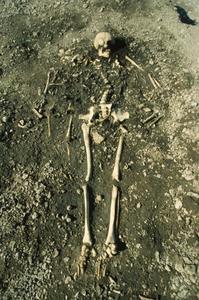
Grave 4 mirrored this: An 8- to 10-year-old girl stretched out on her back, accompanied by a cluster of bones from a young adult female, her third-degree relative, perhaps a great-aunt or cousin. These revelations come from meticulous genetic work. To determine sex, scientists checked for chromosomal markers: Two X chromosomes for females, an X and Y for males, crucial since children’s skeletons often lack clear indicators. Kinship degrees were gauged by shared DNA segments.
Kinship in Hunter-Gtherer Cultures
First-degree relatives (parents, kids, full siblings) match about 50 percent; second-degree (grandparents, half-siblings) around 25 percent; third-degree (cousins, great-grandparents) roughly 12.5 percent. Mitochondrial DNA (mtDNA), passed solely through mothers, helped trace maternal lines, while broader nuclear DNA filled in the paternal and overall puzzle.
Tiina Mattila, the population geneticist leading the genetic analyses, noted the rarity of such insights. “As it is unusual for these kinds of hunter-gatherer graves to be preserved, studies of kinship in archaeological hunter-gatherer cultures are scarce and typically limited in scale,” she said. This pilot study, analyzing ten individuals from the four graves, is just the start.
The team plans to expand to over 70 remains from Ajvide, probing deeper into social organization, migration patterns, and rituals.Paul Wallin, a professor of archaeology and Ajvide expert, sees broader implications. “The analyses provide insight into social organisation in the Stone Age,” he told researchers. In a time without written records, these burials suggest oral traditions or communal knowledge kept track of extended families.
Why bury cousins or aunts together?
It could signal alliances, inheritance of roles, or even symbolic ties to ancestors. The PWC’s genetic makeup, about 80 percent from Mesolithic hunter-gatherers and 20 percent from Neolithic farmers, hints at interactions with outsiders, perhaps through marriage or trade.
On social media platform X, the discovery sparked quick buzz among history buffs and scientists. Archaeology enthusiast Nrken19 posted: “DNA analyses suggest that Gotland hunter-gatherers were well aware of family lineages and that relationships beyond the immediate family played an important role,” linking to a Phys.org summary.
In a follow-up, he added details on the PWC’s dual ancestry, blending Mesolithic and farmer roots. Gerry Ward, a science news sharer, pointed to a related piece: “Using aDNA to determine family relationships of individuals buried approximately 5,500 years ago.”
These online ripples underscore the public’s fascination with ancient DNA, a field exploding thanks to advances in sequencing tech. Just as in modern forensics, ancient DNA (aDNA) extraction involves grinding bone samples, isolating fragments, and amplifying them via PCR before sequencing.
Degradation over millennia means short, fragmented strands, contaminated by microbes or modern handlers. But tools like next-generation sequencing have made it possible to reconstruct genomes from scraps, revealing everything from Neanderthal interbreeding to migration waves. This Gotland study fits into a global mosaic.
Similar work in Britain uncovered a 5,700-year-old family tree from a Gloucestershire tomb, showing polygamy and patrilineal descent. In Siberia, Bronze Age graves revealed complex kin networks among nomads. Here, the absence of immediate family in many co-burials might indicate taboos against burying parents with kids, or perhaps rituals honoring extended clans to strengthen community bonds.Yet, questions linger.
Were these burials simultaneous, or added over time?
The relocated man in Grave 2 suggests secondary interments, a practice seen in other cultures to reunite kin. And the children’s presence in most graves raises poignant queries about mortality rates or sacrificial rites, though no evidence supports the latter. As Uppsala’s team digs deeper, Ajvide could illuminate how hunter-gatherers navigated a world on the cusp of agriculture.
In an era of climate shifts and resource pressures, family ties likely provided safety nets, much like today. Malmström’s words resonate: These people weren’t isolated primitives but part of intricate social webs, tracking lineages with the precision of a family tree app.
The Stone Age, often romanticized as brutal and basic, emerges more nuanced, full of relationships that echo our own. As Wallin put it, it’s a window into “life histories and burial rites” that humanize our ancestors. In Gotland’s quiet graves, the past whispers secrets, reminding us that family, in all its forms, has always been the thread binding humanity.
Check Related FAQs:
How Ancient DNA Reveal Kinship Degrees?
Ancient DNA from teeth and bones was analyzed to determine sex via chromosomes (XX for females, XY for males) and kinship by shared genetic material. First-degree relatives like parents or siblings share about 50%; second-degree (half-siblings, grandparents) around 25%; third-degree (cousins) roughly 12.5%. This mapping uncovered extended family ties in Gotland’s Stone Age graves, beyond immediate kin.
What Is the Pitted Ware Culture?
The Pitted Ware Culture (PWC) was a Neolithic hunter-gatherer society in Scandinavia around 5,500 years ago, thriving on seal hunting, fishing, and foraging. Genetically distinct from contemporary farmers, they inhabited sites like Ajvide on Gotland, leaving pottery with pitted decorations and communal graves. Their lifestyle persisted amid Europe’s agricultural shift, blending Mesolithic roots with minor farmer influences.
How Did Stone Age Hunter-Gatherers Track Extended Family Ties?
Imagine epic fireside tales weaving generations! These savvy survivors used oral traditions, memorized genealogies, and kinship rituals to map out cousins and aunts. By mingling with distant groups to dodge inbreeding, they built vast social webs, ensuring family lore endured through stories alone.
What Do These Burials Reveal About Gender Roles in Ancient Societies?
Shattering stereotypes, these graves scream equality! In Pitted Ware culture, men, women, and kids mingled in burials without strict divisions or status gaps. Mixed-sex co-burials suggest flexible roles, where gender didn’t boss rituals or hierarchy—hinting at a balanced society far from rigid patriarchal norms.
Could Similar DNA Studies Uncover Hidden Family Ties Elsewhere?
When DNA has mapped seven-generation clans in Britain, exposed elite incest in Ireland, and traced kin from Mongolia to Russia. Worldwide, it reveals patrilineal lines, exogamy, and social twists in tombs from Europe to Asia, rewriting human history.
Why Cousins Be Buried Together Instead of Immediate Family?
Ancient rites often honored extended kin to symbolize lineages, dodge nuclear family taboos, or strengthen social bonds. At Ajvide, co-burials of cousins and aunts spotlight deep kinship knowledge, weaving community ties through ritual—far beyond just parents and children.

DNA Sheds Light on Stone Age Kinship Family Bonds in Ancient Gotland Graves added by Sridhar P on
View all posts by Sridhar P →