
Escalating conflict in Ukraine, a worsening hunger crisis in Nigeria and severe drought conditions in Kenya are intensifying humanitarian challenges across several regions, according to recent updates from United Nations agencies.
Officials warn that civilians are facing growing threats from armed conflict, climate shocks and food insecurity, with millions in urgent need of assistance.
Civilians Killed In Ukraine Attacks
Recent Russian strikes in Ukraine have continued to cause civilian casualties and damage to homes and infrastructure.
According to the UN children’s agency UNICEF, attacks in the Odesa region on Wednesday killed a 17-year-old boy. The agency condemned the violence and urged an immediate halt to strikes targeting civilian areas and critical infrastructure.
UNICEF said such attacks place children at particular risk and disrupt essential services on which families depend.
Meanwhile, the UN Office for the Coordination of Humanitarian Affairs (OCHA) reported that attacks on the southeastern city of Kryvyi Rih resumed on Thursday after earlier strikes the previous day.
Humanitarian teams have been working to assist residents affected by the bombardment.
“Teams delivered shelter materials to cover damaged homes and provided protection services to the affected residents,” OCHA said, noting that harsh winter conditions are worsening the humanitarian situation.
UN High Commissioner for Human Rights Volker Türk earlier condemned ongoing attacks on Ukraine’s energy infrastructure, which have disrupted electricity, heating and water supplies.
“Civilians are bearing the brunt of these attacks,” Türk said. “They can only be described as cruel. They must stop.”
Food Aid Shortfall Threatens Millions In Nigeria
In West Africa, the World Food Programme (WFP) has warned that more than one million people in northeast Nigeria could soon lose access to emergency food and nutrition assistance unless additional funding is secured within weeks.
Nigeria is already facing one of its most severe hunger crises in recent years. Aid agencies estimate that nearly 35 million people could face acute or severe food insecurity during the upcoming lean season.
Among those most at risk are approximately 15,000 residents in Borno State who could fall into catastrophic levels of hunger, just one step away from famine.
The crisis has been worsened by renewed violence in northern Nigeria, where armed conflict has destroyed crops, displaced families and disrupted local food systems.
“Now is not the time to stop food assistance,” said David Stevenson, WFP’s country director in Nigeria.
He warned that cutting aid would have “catastrophic humanitarian, security and economic consequences” for communities already struggling to survive.
The WFP is seeking $129 million to maintain its operations in northeastern Nigeria over the next six months.
Severe Drought Worsens Food Crisis In Kenya
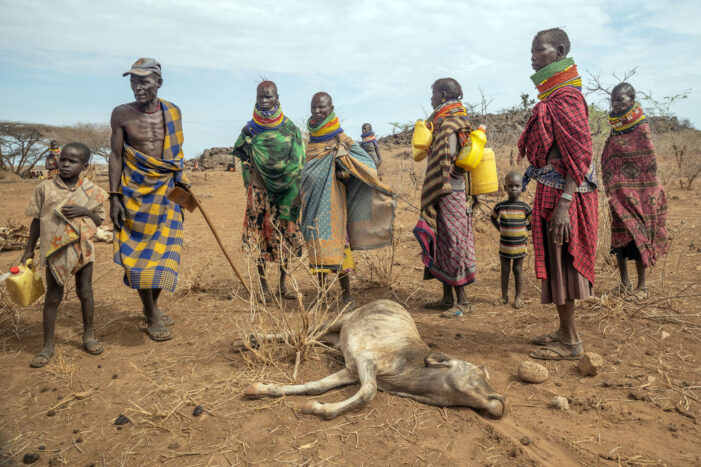
Meanwhile, prolonged drought conditions in Kenya are increasing food insecurity for millions of people.
According to the World Health Organization (WHO), more than two million people are currently affected following the October to December 2025 rainy season, which was among the driest on record.
The lack of rainfall has led to rising malnutrition levels, increased risks of disease outbreaks and disruptions to basic health services.
Ten counties in Kenya are currently experiencing drought conditions, including one classified at an “alarm” stage. An additional 13 counties in the country’s arid and semi-arid regions are also showing signs of drought stress.
The crisis is not limited to Kenya. Similar weather patterns are affecting neighbouring Somalia, Tanzania and Uganda, placing millions more people at risk.
To support response efforts, the WHO has supplied emergency medical kits, including cholera treatment supplies and pneumonia kits, while pre-positioning essential equipment in counties considered most vulnerable.
However, the agency warned that urgent action is needed to ensure communities and livestock have access to sufficient food and safe drinking water.
Without rapid intervention, humanitarian officials caution that the situation could deteriorate further, placing additional strain on already fragile health and food systems across the region.
Aid, attacks, cuts, drought, Food, kenya, looming, News, Nigeria, ukraine, Winter, world

World News in Brief: Ukraine Strikes, Nigeria Hunger Crisis And Kenya Drought Deepen Global Humanitarian Concerns added by Arun Kumar N on
View all posts by Arun Kumar N →