
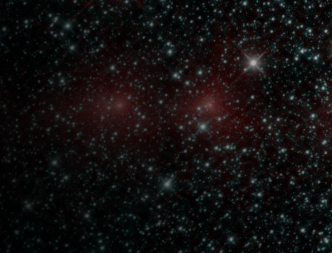
An international team led by Peking University confirmed the mass of a rogue planet for the first time using a rare alignment of telescopes in May 2024. The object, detected through microlensing, was found to be about the mass of Saturn, confirming it as a true planet. The findings, published in Science in January 2026, relied on combined data from ground observatories and the Gaia spacecraft. Scientists say the discovery could reshape understanding of free-floating planets across the Milky Way.
In the vast dark between stars, planets drift unseen. For years, astronomers suspected they existed in large numbers, but proving what they were has been far more difficult.
That changed with a brief flicker of light in May 2024.
The signal lasted just two days. It came from a distant star whose brightness momentarily intensified as an unseen object passed in front of it. That phenomenon, known as microlensing, has long been one of the few ways to detect rogue planets.
This time, the data went further.
“For the first time, we have a direct measurement of a rogue planet candidate’s mass and not just a rough statistical estimate,” said Dong Subo, an astronomer at Peking University. “We know for sure it’s a planet.”
Microlensing technique confirms rogue planet mass for first time
Rogue planets, unlike Earth or Jupiter, do not orbit a star. They move independently through space, making them nearly impossible to detect with traditional methods that rely on starlight.
Microlensing offers a workaround. When a planet crosses the line of sight between Earth and a distant star, its gravity bends the star’s light, briefly amplifying it. The effect acts like a natural magnifying glass.
Astronomers have used this method for decades, but it comes with limitations. While it reveals that an object exists, it often cannot precisely determine its mass because distance and gravitational strength are intertwined in the signal.
That ambiguity has left many rogue planet candidates in a gray area.
The new study, published in Science, resolved that uncertainty for one object by combining observations from multiple telescopes across Earth and space. The event, catalogued as KMT-2024-BLG-0792 and OGLE-2024-BLG-0516, was first detected by the Korea Microlensing Telescope Network and the Optical Gravitational Lensing Experiment.
At the same time, the Gaia spacecraft, operated by the European Space Agency, recorded the same event from its position roughly 1.5 million kilometers from Earth.
That overlap proved critical.
Gaia parallax measurement unlocks distance and mass data
The key to the breakthrough lay in measuring what astronomers call the microlens parallax effect. This effect works similarly to human depth perception, where viewing an object from two different positions reveals its distance.
In this case, Gaia’s vantage point in space and Earth-based telescopes provided two perspectives of the same event. The microlensing signal appeared about two hours later from Gaia’s position than from Earth.
That time difference allowed researchers to separate the object’s distance from its gravitational influence, enabling a precise mass calculation.
“We are able to use the same principle to extract the distance information of this rogue planet candidate, finding the mass and distance separately,” Dong said.
The result placed the object at roughly one-fifth the mass of Jupiter, comparable to Saturn. That measurement confirmed it as a planet rather than a more massive object such as a brown dwarf.
Implications for rogue planet population in the Milky Way
The finding carries implications beyond a single object. Astronomers have long theorized that the Milky Way Galaxy may host vast numbers of rogue planets, potentially numbering in the billions or more.
“Our discovery offers further evidence that the Galaxy may be teeming with rogue planets that were likely ejected from their original homes,” Dong said.
These planets are thought to form within star systems before being expelled through gravitational interactions, especially during early stages of planetary formation. Passing stars may also disrupt systems, sending planets into interstellar space.
Some theories suggest that a subset of rogue planets could form independently, collapsing directly from gas clouds without ever orbiting a star.
The new measurement strengthens confidence in microlensing surveys that have hinted at such populations for years.
Future space telescopes to expand rogue planet discoveries
The study also highlights the importance of coordinated observations across multiple platforms. The overlap between Gaia, KMTNet, and OGLE marked the only time in Gaia’s operational lifetime that all three observed the same rogue planet candidate.
Future missions are expected to make such measurements more routine.
NASA plans to launch the Nancy Grace Roman Space Telescope, which will conduct large-scale microlensing surveys capable of detecting hundreds of rogue planets. China is also developing new missions, including the Chinese Space Station Survey Telescope and a proposed Earth 2.0 mission, both of which include microlensing in their scientific goals. [8]
These next-generation observatories will operate above Earth’s atmosphere, improving sensitivity and reducing distortions that affect ground-based observations.
“The new space-based facilities such as Roman, CSST, and Earth 2.0 are going to revolutionize the field of microlensing and the study of free-floating planets,” Dong said.
For now, the confirmed mass of a single rogue planet marks a turning point. It transforms a fleeting signal into a measurable world, offering a clearer view of a population that has long remained in the shadows.
Also Read:
Thousands Of Pico-Satellites Could Redefine Direct Smartphone Connectivity From Space
XRISM finally solves famous star’s 50-year space mystery
free floating planets, Gaia spacecraft discovery, microlensing astronomy, Moon, Planets, rogue planet, rogue planet mass measurement, Saturn mass planet, solar system, Space, space telescope research, Sun

Space Breakthrough: Astronomers confirm rogue planet candidate as a planet for the first time added by Arun Kumar N on
View all posts by Arun Kumar N →