
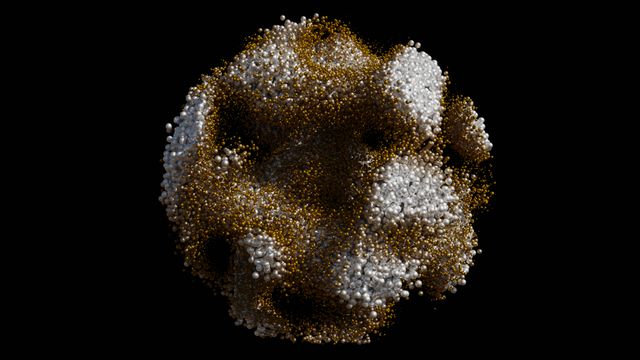
Researchers at the Massachusetts Institute of Technology (MIT) have developed a nanoscale delivery system that could advance the development of personalized cancer vaccines. The platform uses modified, harmless viruses to carry cancer antigens, allowing researchers to customize vaccines to target specific proteins found in individual patients’ tumors.
The vaccine delivery system is built around M13, a bacteriophage that forms a nanofiber and can be coated with cancer antigens. By controlling the density of these antigens on the particle’s surface, the researchers found that they could strengthen the immune response against tumors.
In experiments involving mice, vaccines developed using this approach helped prevent the development of colon tumors and reduced the likelihood of tumor formation in another cancer model.
“The great thing about this is that it’s modular and we could switch out different antigens on demand, so you could design it to be patient-specific and target a known antigen for a particular kind of cancer,” says Angela Belcher, the James Mason Crafts Professor of Biological Engineering and Materials Science and Engineering at MIT and a member of the Koch Institute.
How the M13 Bacteriophage Delivers Cancer Antigens
The M13 bacteriophage is a virus that does not harm humans. It consists of a single strand of DNA enclosed within a protein shell, known as a capsid. For more than two decades, Belcher’s laboratory has engineered these viruses to assemble into nanoscale structures for different applications, including batteries, semiconductors, solar cells and catalysts.
The researchers are now adapting this technology for medical applications, particularly vaccine delivery.
To create the cancer vaccine, they modified a protein called pVIII, which forms the long filament-like structure of the virus. By attaching cancer antigens to the ends of these proteins, the team created particles capable of presenting specific tumor targets to the immune system.
The antigen density is important because it influences how effectively the vaccine can stimulate an immune response. Huang found that adding one or two negatively charged amino acids to the modified pVIII protein increased antigen density. The researchers could further adjust the density by introducing a genetic mutation that slows the production of the antigen protein.
“We’re taking this toolkit that we’ve worked on and developed over decades and formatting it to be specific for vaccine therapeutics,” Belcher says. “Some of the lessons learned from making batteries and all these other things are now being fine-tuned to make personalized vaccines.”
Researchers Control Antigen Density to Strengthen Immune Response
The team also modified the bacteriophage’s genetic sequence to improve its ability to act as a vaccine adjuvant. Adjuvants are substances that help stimulate a stronger immune response and are commonly included in vaccines.
M13 can perform this function because its single-stranded DNA activates a pathway called TLR9, which is part of the body’s innate immune system. This allows the researchers to genetically control both the antigen presentation and the adjuvant properties of the vaccine platform.
“We can control the exact length. We can control the exact antigen expression, density, pattern, the exact adjuvant amount. A lot of times with a vaccine, you’ll have to put a different adjuvant with it, but now it’s all genetically encoded,” Belcher says.
Using the platform, researchers produced particles carrying an antigen called SIINFEKL at densities ranging from 6% to 70%. This small protein is commonly used as a model antigen to evaluate vaccine effectiveness.
The team tested vaccines with antigen densities of 6% and 35% in mice. The higher-density vaccine provided greater protection. Mice that received it were less likely to develop tumors after exposure to melanoma cancer cells expressing SIINFEKL. They also produced more T cells targeting the antigen.
The researchers found that dendritic cells, which help activate T cells, were more likely to take up vaccines with higher antigen density.
Personalized Vaccines Show Promise Against Colon Tumors
In another experiment, the researchers developed a vaccine carrying ADPGK, a neoantigen specifically expressed by colon tumors in a mouse cancer model. A neoantigen is a protein found in tumor cells that can serve as a target for the immune system.
Mice receiving the higher-density vaccine were significantly less likely to develop colon tumors.
The current study focused on preventing cancer development. In previous work, the researchers had adapted the platform to treat colon tumors that had already formed in mice. They now hope to investigate its potential against other cancer types.
“This interesting work adds another cog to improve the translational potential of the M13 phage platform for cancer immunotherapeutics,” said Alberto Danielli, an associate professor of molecular biology at the University of Bologna who was not involved in the study. “I look forward to seeing whether this platform is also effective against established tumors and whether additional tumor antigens can be displayed with comparable molecular and immunological efficacy.”
The modular design could make it possible to replace one antigen with another depending on the cancer being targeted.
“Because this is a modularly engineered platform, we can change the antigen we are interested in. For colon cancer, we use this specific antigen. For other types of cancer, we can just plug in other antigens and they can be assembled in this platform,” Huang says.
Read More :