
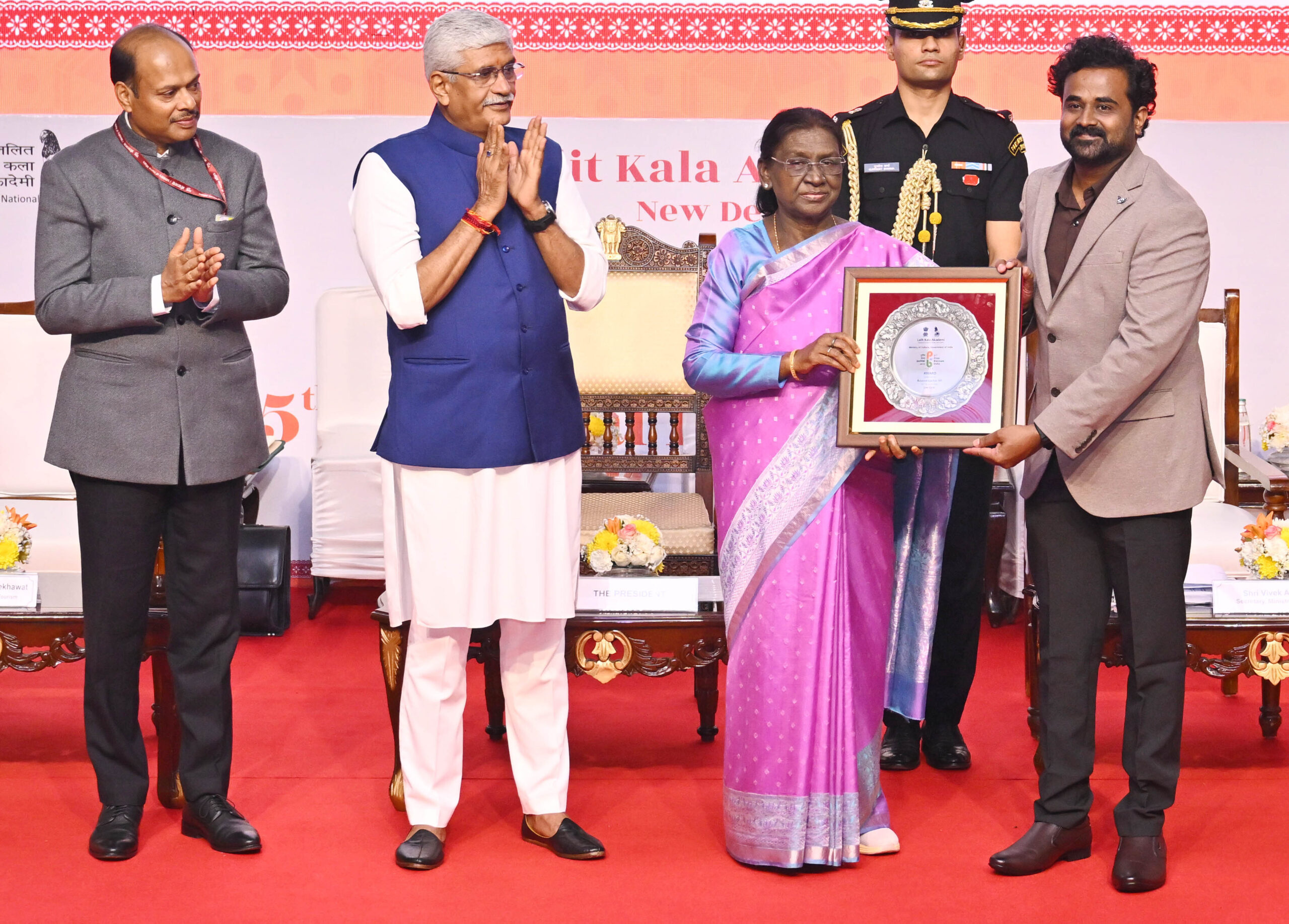
President Droupadi Murmu presented the Lalit Kala Akademi awards to selected artists participating in the 65th National Exhibition of Art in New Delhi on October 21, 2026. She also felicitated the Grand Prize winners and Honourable Mentions of the 3rd Print Biennale India 2026, recognising artistic contributions across different forms and mediums.
Speaking at the ceremony, the President described the occasion as a celebration of India’s artistic heritage, cultural diversity and contemporary creativity. She highlighted the importance of preserving the country’s diverse artistic traditions while encouraging creative expression that reflects changing times and society.
The President emphasised that art extends beyond paintings, sculptures and other physical works. According to her, artistic expression reflects cultural identity, collective memories, present-day experiences and aspirations for the future. She also called for greater opportunities for traditional artists in remote areas, particularly through training in new technologies and contemporary art techniques.
Murmu Calls for Greater Support for Young and Traditional Artists
Addressing the gathering, President Murmu highlighted the role of art in helping people understand society and their times from fresh perspectives. She said artistic expression is not restricted to particular forms or mediums but reflects the culture and experiences of the communities that produce it.
The President stressed the importance of equipping traditional artists, especially those living in remote areas, with training in new technologies and contemporary art techniques. Such opportunities, she said, would help them showcase their skills and participate in competitions on a wider platform.
She also urged stakeholders to create more opportunities for young and emerging artists to develop their talent, experiment with new mediums and expand their creative potential.
“Let us provide ample opportunities to young and emerging artists to develop their talent, explore new mediums, and expand their creative potential,” the President said.
Her remarks underscored the need to support both established artistic traditions and new forms of creative expression. By expanding access to training and opportunities, artists from different backgrounds could gain greater visibility and participate more widely in the art world.
President Highlights Financial Support and Wider Access to Art
President Murmu also drew attention to the practical challenges artists face in sustaining their work. She said artists today require more than opportunities to create. They also need financial support, access to broader markets and connections with art collectors.
The President welcomed efforts by the Lalit Kala Akademi and the Ministry of Culture to encourage the sale of artworks. Such initiatives can help artists reach potential buyers and create opportunities to earn from their creative work.
She further emphasised that art should not remain confined to galleries. Instead, it should reach schools, universities, public spaces and wider sections of society, allowing more people to engage with artistic expression.
Her remarks highlighted the importance of making art accessible beyond established cultural institutions while creating conditions that enable artists to sustain their careers.
The award ceremony brought together the recognition of artistic achievement and a broader call to strengthen opportunities for creators across India. Through her address, President Murmu emphasised the need to preserve the country’s diverse artistic heritage, support traditional artists through access to contemporary techniques, and help young talent explore new forms of expression.
She also reiterated the importance of connecting artists with financial resources and wider audiences, while ensuring that art reaches people across educational institutions and public spaces. The message was clear: supporting India’s artistic community requires both opportunities for creative development and practical measures that help artists share their work with society.
Read More :
 Sridhar P