
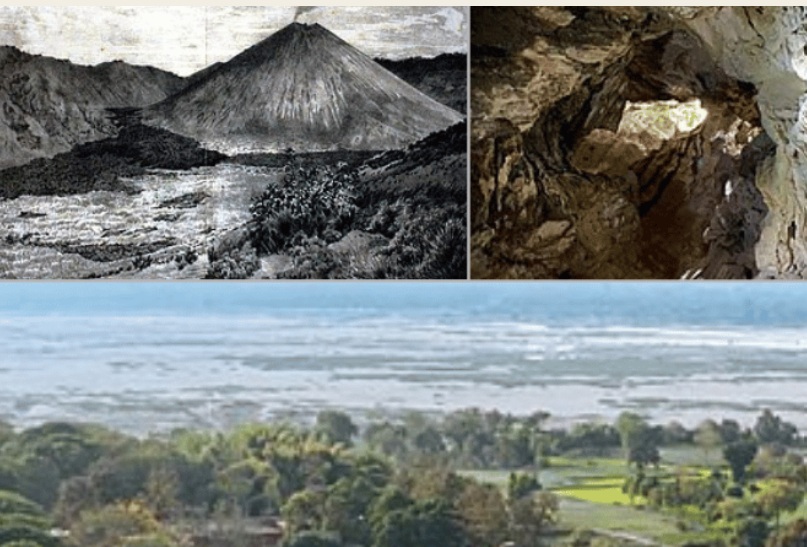
Baratang’s limestone caves, volcanic islands and Chhattisgarh’s archaeological landscape enter preliminary heritage process, opening a new chapter for conservation
India’s natural and archaeological heritage has gained international attention with three sites added to UNESCO’s World Heritage Tentative List, bringing geological formations in the Andaman and Nicobar Islands and an ancient cultural landscape in Chhattisgarh into the preliminary pipeline for possible World Heritage recognition.
The additions, announced on October 20 by India’s Permanent Delegation to UNESCO in Paris, are the Karst-Mud-Volcano Complex of Baratang, the Andaman Subduction Volcanoes and the Sirpur Cultural and Archaeological Landscape. The three sites represent distinct dimensions of India’s heritage, from active geological processes and limestone formations to centuries-old religious architecture and urban settlement.
The inclusion is an initial step, not a final UNESCO World Heritage designation. The Tentative List identifies sites a country may consider nominating for inscription on the World Heritage List, subject to further evaluation and the applicable nomination process.
Three sites, three distinct heritage stories
Baratang: limestone caves and mud volcanoes
Located in the Andaman Islands, the Karst-Mud-Volcano Complex of Baratang combines limestone caves with active mud volcanoes in a landscape shaped by geological processes.
The proposed property covers 299.57 square kilometres, while the limestone cave area identified in the UNESCO description covers approximately one square kilometre. The caves, locally known as Jalki, are embedded in a wider landscape of tropical forests and coastal ecosystems.
The site’s significance extends beyond its geological formations. Its surrounding ecosystems contribute to regional biodiversity, while the combination of caves and mud volcanism gives the area scientific and conservation value.
The Geological Survey of India identified Baratang’s mud volcano as a Geo-Heritage Site in 2025, adding to the area’s existing scientific importance.
The challenge ahead will be to balance conservation with tourism. Increased visibility could create economic opportunities for local communities, but visitor management and environmental protection will be important if interest in the site grows.
Andaman Subduction Volcanoes: Barren Island and Narcondam
The second addition focuses on the Andaman Subduction Volcanoes, associated with Barren Island and Narcondam Island in the Andaman Sea.
Barren Island is known for its volcanic activity, while Narcondam rises steeply from deep water and is characterised by forested slopes, rocky coastlines and caverns. UNESCO’s description places Narcondam’s summit at approximately 710 metres above sea level.
The proposed heritage property covers the landmasses of the two volcanic islands. Their geological significance lies in the processes associated with subduction, in which one tectonic plate moves beneath another and contributes to volcanic activity.
Both islands are protected areas, and entry requires permission from wildlife authorities. Their ecological sensitivity means that any future tourism or research activity would need to respect existing conservation restrictions.
The tentative-list inclusion gives the islands greater visibility as geological and natural heritage assets, but it does not automatically alter their protected status or open them to visitors.
Sirpur: an ancient cultural and archaeological landscape
Unlike the two geological sites, the Sirpur Cultural and Archaeological Landscape in Chhattisgarh represents India’s architectural, religious and urban history.
Situated in Mahasamund district along the Mahanadi River, Sirpur is approximately 78 kilometres from Raipur. Its archaeological remains include structures dating from the fifth to the 12th century CE.
The landscape contains temples and other architectural remains associated with different religious traditions. These include Vishnu and Shiva temple complexes, the Rajmahal Complex, the Gandheshwar Temple and the Bateshwar group of monuments.
Sirpur’s importance lies in the relationship between religious life, commerce and settlement. Its development as a spiritual centre also brought together cultural and economic activity, creating a layered archaeological landscape rather than a single isolated monument.
The proposed site’s broader setting is therefore central to its significance. Protecting individual structures is important, but understanding their relationship to the settlement and its historical development is equally necessary.
What tentative-list inclusion means for India
India already has 45 UNESCO World Heritage Sites, comprising 37 cultural properties, seven natural properties and one mixed property, according to the report announcing the latest additions. The three new entries expand the range of Indian locations being considered for potential international recognition.
However, inclusion on the Tentative List should not be confused with inscription on the final World Heritage List. A tentative listing does not itself confer World Heritage status, guarantee future approval or replace domestic conservation requirements.
The next stages would involve preparing and pursuing nominations under UNESCO’s World Heritage framework, supported by documentation of each property’s significance, boundaries, conservation arrangements and management plans.
For Baratang and the volcanic islands, the emphasis will include geological integrity, ecological protection and the management of sensitive natural environments. For Sirpur, documenting the archaeological landscape and protecting the relationships between its monuments and historical settlement will be central considerations.
The additions also highlight the different responsibilities involved in preserving natural and cultural heritage. Geological formations cannot be conserved in isolation from the processes that shape them, while archaeological landscapes require attention to both physical remains and their historical context.
For local administrations and communities, international recognition could eventually support heritage awareness and responsible tourism. But the immediate significance of the announcement is that the three properties have entered a preliminary stage in a process that requires further work before any final designation.
The latest additions place India’s volcanic landscapes, limestone caves and ancient archaeological remains on a wider international heritage radar. Whether they ultimately secure World Heritage status will depend on the strength of their nominations and the ability to demonstrate their significance, protection and long-term conservation.
FAQs
1. Which three Indian sites have been added to UNESCO’s Tentative List?
The Karst-Mud-Volcano Complex of Baratang, the Andaman Subduction Volcanoes and the Sirpur Cultural and Archaeological Landscape in Chhattisgarh.
2. Have the three sites received UNESCO World Heritage status?
No. They have entered the Tentative List, a preliminary stage before a country can pursue formal World Heritage nomination.
3. Why is Baratang significant?
Baratang combines limestone caves, active mud volcanoes and surrounding tropical forest and coastal ecosystems.
4. Which islands are included in the Andaman Subduction Volcanoes proposal?
The proposal covers Barren Island and Narcondam Island in the Andaman Sea.
5. What makes Sirpur historically important?
Sirpur contains archaeological and architectural remains dating from the fifth to the 12th century CE, reflecting religious, cultural and economic activity along the Mahanadi River.