
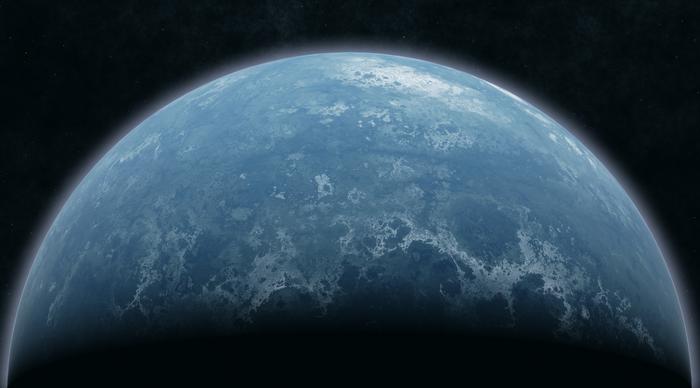
Researchers at the University of Washington have developed a computer simulation of Earth without life to help astronomers identify atmospheric evidence of potential life on distant rocky planets.
Scientists searching for life beyond Earth have catalogued more than 6,000 planets outside our solar system. Researchers are examining the atmospheres of promising exoplanets for chemical signatures that could indicate biological activity.
Atmospheres similar to Earth’s are of particular interest because they can retain enough heat to support liquid water on a planet’s surface, a key condition for life as we know it. However, scientists must also distinguish between planets that are merely habitable and those that actually support life.
To address this challenge, researchers at the University of Washington (UW) have developed a virtual model of Earth that simulates the planet’s geochemical systems without including the influence of life.
Simulation Reconstructs Earth’s Geochemical Evolution Over Five Billion Years
Published on September 18 in The Planetary Science Journal, the study describes a simulation that models Earth’s geochemical systems over five billion years. It covers the planet’s history from its formation approximately 4.5 billion years ago to around 500 million years into the future.
The model tracks the exchange of chemicals between Earth’s core, mantle, crust, surface and atmosphere over time. By excluding biological influences, researchers created a baseline for understanding how a planet’s atmosphere and other systems might evolve without life.
The simulation accurately predicted 19 planetary properties, including heat flow through the mantle. Researchers also designed it to be adaptable to other rocky planets, allowing scientists to investigate whether their observed atmospheric conditions can be explained without biological activity.
“This model can help us see how habitable but non-living planets might mimic living planets,” said lead author Samantha Gilbert-Janizek, who conducted the research as a University of Washington doctoral student in astronomy and is now a postdoctoral fellow at UC Riverside.
“When we interpret observations of an exoplanet’s atmosphere, this tool will help us determine the probability that what we observe indicates life on the surface.”
Model Tracks Chemical Exchanges Across the Planet
The research builds on an earlier model developed in the laboratory of senior author Rory Barnes, an associate professor of astronomy at the University of Washington.
Previous versions simulated the planet’s core, mantle, crust and stellar radiation but did not incorporate its surface or atmosphere. Gilbert-Janizek expanded the model to include these components, providing a more complete picture of how chemicals move through Earth’s interconnected systems.
A planet’s atmosphere is influenced by several non-biological processes, including heat and gases released from its interior and radiation from its host star. These factors can produce atmospheric conditions that may resemble those associated with life.
On Earth, for example, plants and animals continuously release oxygen and methane into the atmosphere. These two gases react with each other and destroy one another. Their continued presence together could therefore attract the attention of astronomers studying Earth from another planetary system, as it may suggest that biological processes are replenishing them.
The new simulation helps researchers determine whether similar atmospheric combinations could occur without life.
Researchers Can Test Atmospheric Conditions on Distant Planets
The model can be adapted to study rocky exoplanets by entering basic information about a planet and simulating its atmospheric evolution without biological influence.
Researchers can then compare the simulated atmosphere with actual observations. If the model cannot reproduce the observed atmospheric conditions without life, the planet becomes a more interesting candidate for further investigation.
“Dr. Gilbert-Janizek’s work represents an exciting step toward understanding where life can exist in the universe,” said senior author Rory Barnes.
“After more than a decade of work by many scientists, Dr. Gilbert-Janizek has finally completed a model of the Earth that simultaneously reproduces properties of Earth’s core, mantle, surface and atmosphere. That calibration gives us confidence that future simulations of exoplanets will be accurate.”
Research Could Support Future Exoplanet Telescopes
The improved model could also help guide the design of future telescopes intended to study distant planets, including NASA’s proposed Habitable Worlds Observatory.
Gilbert-Janizek highlighted the long-term scientific effort required to achieve the goals of such missions.
“Realizing the ambitious goals of a telescope like the Habitable Worlds Observatory requires decades of work across many generations of scientists,” Gilbert-Janizek said.
“I’m so grateful to join this lineage and one day pass the torch to the next generation so that we can continue chipping away at this question of whether or not we are alone in the universe.”
Read More :