
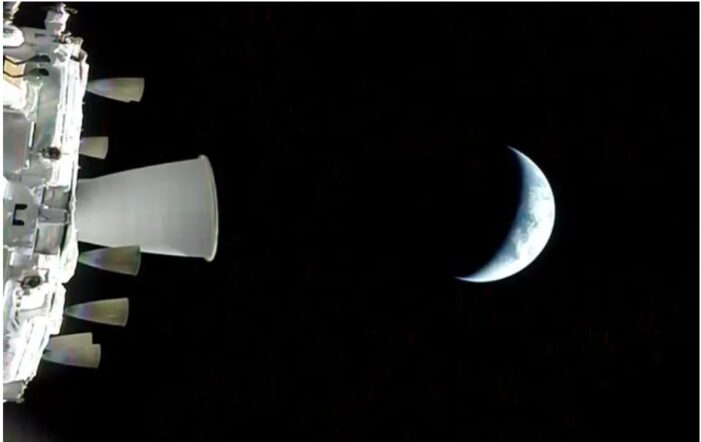
NASA confirmed the Artemis II crew completed the perigee raise burn on April 2, firing Orion’s engine for 43 seconds to refine its orbit around Earth. The maneuver placed the spacecraft into a stable high Earth orbit ahead of a planned translunar injection later the same day. Mission managers will review system performance before approving the burn that would send astronauts toward the Moon for the first time since 1972.
The Artemis II crew woke to music and a tightly timed task. Minutes later, they were watching their spacecraft reshape its path around Earth.
Inside Orion, the capsule named Integrity, astronauts monitored systems as the engine fired for just over 40 seconds. The burn was brief. Its impact on the mission trajectory was not.
The maneuver marked another step in a sequence designed by the National Aeronautics and Space Administration to prepare astronauts for a return to deep space operations.
Perigee raise burn details and Orion orbit adjustment
The perigee raise burn began after a scheduled wake-up at 7:06 a.m. Eastern Time, when mission control in Houston signaled the crew with the song “Sleepyhead” by Young and Sick.
Shortly after, Orion’s service module main engine ignited. It burned for 43 seconds, increasing the spacecraft’s perigee, the lowest point in its orbit around Earth.
This adjustment refined Orion’s trajectory, placing it into a stable high Earth orbit. The new orbit aligns with the spacecraft’s planned path for departure toward the Moon.
Engineers design these burns to test propulsion precision under real mission conditions. Small timing or thrust variations can significantly alter a spacecraft’s trajectory over long distances.
Following the maneuver, astronauts returned to a rest cycle lasting about four and a half hours, part of a schedule structured to balance workload and recovery during the mission’s early phase.
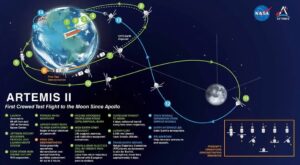
Translunar injection burn timing and mission approval process

Artemis II Update-5: Perigee raise burn complete, translunar injection burn next added by Sridhar P on
View all posts by Sridhar P →