
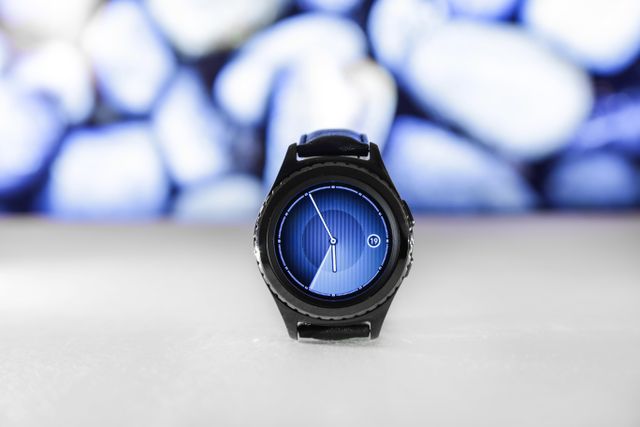
Researchers at Northwestern University have developed two smartwatch-based systems that can identify hand gestures and learn new arm movements with minimal training. The technologies, called EITWatch and TransfHAR, use sensors and electrodes built into smartwatches to detect movements beneath the skin and recognize everyday activities without relying on cameras.
The research could expand how people interact with wearable devices while opening up potential applications in healthcare, accessibility and prosthetics. The systems may eventually help users control bionic hands, enable remote monitoring of patients and track routine activities such as exercising or personal hygiene.
EITWatch Uses Electrical Signals to Recognize Hand Gestures
One of the systems, EITWatch, uses a technique called Electrical Impedance Tomography (EIT) to identify hand movements by sensing muscles and tendons beneath the wrist’s surface. Eight small electrodes positioned on the back of a smartwatch transmit low-level electrical signals through the wrist, creating patterns that change as muscles and tendons move.
Each gesture, including pointing a finger, making a fist or giving a thumbs-up, generates a distinct electrical pattern. The system learns to identify these patterns and convert them into commands. For instance, a thumbs-up gesture could be used to send a text message, while pointing a finger could activate an exercise step counter.
Karan Ahuja, the principal investigator behind both projects at Northwestern University, said the technology could offer a more private alternative to camera-based hand tracking. Cameras currently provide one of the most effective ways to identify hand movements, but they raise privacy concerns and require the hands to remain within the camera’s field of view. A smartwatch, on the other hand, stays in contact with the wrist.
Accessibility is another important motivation behind EITWatch. Novel Alam, a member of the research team, explained that touchscreen interfaces can exclude many users. Adding another input method directly to a smartwatch could provide an alternative way to interact with the device.
The technology could also support the development of prosthetic hands by interpreting wrist signals associated with intended hand movements.
In testing, EITWatch identified six common hand gestures with more than 92% accuracy and five more subtle finger movements with over 91% accuracy. However, the system currently performs best when calibrated for an individual wearer. Using another person’s smartwatch could therefore affect its ability to recognize gestures accurately.
The researchers’ next steps include integrating the electronics into the smartwatch itself and developing a system that can recognize gestures across different wearers without requiring individual calibration.
TransfHAR Learns New Activities From a Few Demonstrations
The second system, TransfHAR, focuses on recognizing a broader range of arm movements and everyday activities. Unlike conventional activity recognition systems that depend on a fixed set of predefined movements, TransfHAR can learn new activities through just a few demonstrations.
The technology uses motion sensors already available in smartwatches, including accelerometers and gyroscopes, to measure wrist acceleration and rotation. Researchers first trained the system using more than 2,700 hours of publicly available movement data covering everyday activities, including walking and exercise.
Once this initial training is complete, users can introduce a new activity by naming it and demonstrating the movement to their smartwatch. The system then incorporates that activity into the user’s personalized set of recognized movements.
This approach allows the watch to account for differences in individual routines. For example, similar arm movements could represent painting a wall for one person and brushing a client’s hair for another.
In a study involving 10 participants, TransfHAR recognized seven newly introduced activities with approximately 90% accuracy after receiving a single one-minute recording of each activity.
The researchers see potential applications in healthcare and everyday activity tracking. In eldercare facilities, healthcare professionals could use the technology to monitor whether patients complete routine personal hygiene activities, such as brushing their teeth or shaving, without installing cameras in their rooms. It could also help track physical therapy exercises and allow gym users to automatically record the exercises they perform.
Research Could Expand the Capabilities of Wearable Devices
Both projects were presented on November 3, 2026, at the Association for Computing Machinery’s Symposium on User Interface Software and Technology (UIST), held in Detroit from November 2 to 5.
Although the technologies are still research prototypes, they demonstrate two different approaches to making wearable devices more aware of human movement. EITWatch examines electrical signals from muscles and tendons beneath the skin, while TransfHAR uses motion data to recognize and learn activities.
The research team is also working with Google partners to expand the movement datasets used by TransfHAR, with the aim of improving its accuracy and ability to recognize more activities.
According to Ahuja, the same approach could eventually extend beyond smartwatches to other wearable devices, including rings and wristbands.
Read More :