
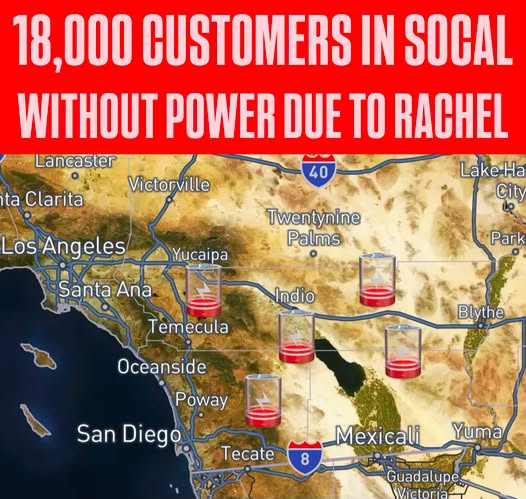
The remnants of Tropical Storm Rachel are bringing a renewed threat of heavy rain and flash flooding across parts of Southern California and the southwestern United States, with meteorologists warning that dangerous conditions could persist as tropical moisture moves inland.
Meteorologist Chris Nunley warned in a public Facebook post that parts of Southern California, southern Nevada, northwestern Arizona and southwestern Utah faced an elevated risk of excessive rainfall. He highlighted the Las Vegas metropolitan area and communities near desert washes, mountain terrain and areas with poor drainage as locations of concern.
The threat comes as Rachel’s remnants interact with a larger weather system, potentially producing intense rainfall over a short period. Flash flooding can develop rapidly in arid regions, where normally dry channels can fill with water even when rainfall is occurring some distance away.
The forecast highlights the possibility of further flooding after earlier storm-related impacts along the Southern California coast. However, the latest inland rainfall threat is distinct from the coastal flooding that affected communities around Long Beach.
Desert Communities Face Sudden Flooding Risk
Nunley said parts of San Diego, Riverside and San Bernardino counties could experience heavy tropical rainfall, particularly across mountainous areas, deserts and the Coachella Valley. Joshua Tree National Park and surrounding communities were also identified in his forecast.
Some storms could produce rainfall rates of 1 to 2 inches per hour, according to the meteorologist. Such intense rainfall can overwhelm drainage systems and cause water to surge through normally dry washes, low-water crossings and roadways.
Las Vegas and surrounding communities could also face flash-flood risks as moisture spreads into southern Nevada and northwestern Arizona. In southwestern Utah, steep terrain and narrow slot canyons are particularly vulnerable to sudden rises in water levels.
Areas affected by previous wildfires may face additional danger. Burn scars can increase runoff and the risk of mudslides and debris flows because damaged vegetation and altered soil conditions can make it harder for the ground to absorb rainfall.
The extent of the danger will depend on where the heaviest rain develops, how long it persists and whether successive rounds of storms move over the same locations.
Flood Threat Could Continue After Rachel Weakens
Nunley said the flood risk could continue even as Rachel’s remnants weaken, because the remaining tropical moisture could interact with a broader upper-level weather disturbance. That combination could sustain rainfall across parts of the Great Basin and Southwest.
He also noted that atmospheric moisture levels were significantly above normal in some areas, potentially allowing storms to produce substantial rainfall in a relatively short period.
Residents and visitors have been urged to exercise caution around flooded roads, desert washes and other low-lying areas. Drivers should never attempt to cross flooded roadways, while hikers should avoid slot canyons and normally dry channels when heavy rain threatens.
Flash flooding can occur far from the location where rain is falling, making conditions especially dangerous in desert terrain. Travelers should monitor local forecasts and official weather alerts before driving through affected areas or visiting parks and canyons.
The latest threat underscores how the effects of a tropical system can extend well beyond its initial coastal impact. As Rachel’s remnants move inland, the main concern shifts from coastal flooding to the possibility of sudden, dangerous runoff across parts of the Southwest.