
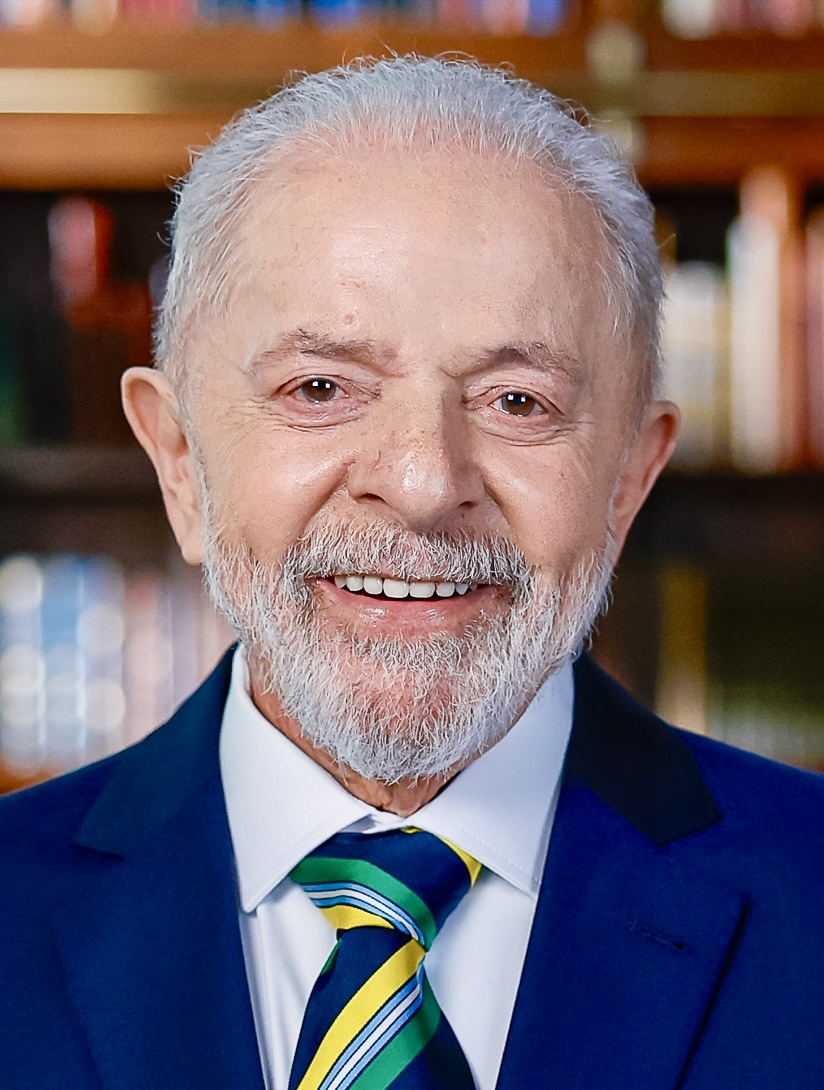
Brazilian President Luiz Inacio Lula da Silva’s victory in Sunday’s presidential runoff has dealt a setback to US President Donald Trump’s efforts to expand the influence of conservative allies across Latin America, keeping the region’s largest economy under left-wing leadership for another four years.
Lula defeated Senator Flavio Bolsonaro, the eldest son of former President Jair Bolsonaro, to secure an unprecedented fourth presidential term. The electoral court declared Lula the winner after a contest that defied the regional shift toward right-wing governments and delivered a setback to the Bolsonaro family’s bid to return to power.
The result also frustrates Washington’s efforts to bring Brazil closer to a conservative political bloc aligned with Trump’s agenda on security, migration and regional policy. The Trump administration’s State Department had campaigned to help the Bolsonaro family regain power, Reuters reported.
Lula, an influential figure on the global left, has frequently clashed with Trump over trade and other policy issues. His victory preserves an important counterweight to the growing number of Latin American governments whose leaders have embraced closer political alignment with Washington.
The outcome, however, does not guarantee that Lula will be able to translate his electoral mandate into greater regional influence. Brazil’s domestic political divisions, economic pressures and a strengthened conservative Congress could constrain his ability to advance his agenda.
Brazil Vote Interrupts Latin America’s Rightward Shift
Flavio Bolsonaro had finished ahead of Lula in the first round and sought to build on the momentum of his father’s political movement. His defeat by more than 4 million votes in the runoff represents a major setback for the Brazilian right, which had hoped to return the Bolsonaro family to the presidency.
Lula’s victory also interrupts a series of electoral gains by right-wing candidates across Latin America, many of whom have advocated tougher security policies, more business-friendly economic measures and closer ties with the Trump administration.
For Washington, Brazil’s political direction matters because of its economic scale and diplomatic reach. As Latin America’s largest economy, Brazil plays an important role in regional integration, international climate negotiations and relations with major powers, including the United States and China.
Lula has sought to preserve Brazil’s independent foreign policy and strengthen cooperation among developing economies. His return to office is likely to sustain that approach, although the precise direction of relations with Washington will depend on decisions by both governments.
Celso Amorim, a former foreign minister under Lula, described the Brazilian president as an important balancing force in Latin America. The result leaves a prominent regional leader outside the increasingly conservative bloc that Trump has sought to cultivate.
Lula’s campaign also drew on his record of social programmes and poverty reduction. His government highlighted lower unemployment, illiteracy and deforestation during his third term, while pledging further support for workers and lower-income households.
His return to office was far from assured. Rising living costs, corruption controversies and changes in the labour market had weakened support for Lula and his Workers’ Party. The president nevertheless secured enough support to overcome Flavio Bolsonaro’s first-round lead.
The result suggests that the region’s rightward movement is not uniform. But it does not establish a broader reversal of conservative electoral gains, with political outcomes continuing to vary across countries.
Conservative Congress Could Limit Lula’s Influence
Lula’s fourth term begins with a domestic political obstacle that could complicate both his economic programme and his foreign policy ambitions. Brazil has elected its most conservative Congress since the country’s return to democracy in the 1980s.
Bolsonaro’s Liberal Party and allied parties could control more than 280 seats in the lower house and up to 50 seats in the Senate, giving the opposition substantial leverage over legislation, spending and key appointments.
The balance of power could force Lula to negotiate with conservative lawmakers to secure support for his proposals. It could also limit his ability to expand social programmes or pursue reforms that require congressional approval.
The economic outlook presents another challenge. The government expects Brazil’s economy to grow by 2.3% next year, while public debt has exceeded 82% of gross domestic product. High interest rates and rising household debt add to concerns about the country’s fiscal position and consumer spending.
Lula has promised measures aimed at easing household financial pressures, including debt relief and expanded welfare support. Yet financing those commitments while addressing concerns about public debt will require difficult choices.
The conservative opposition is expected to push for structural reforms favouring businesses, potentially including spending reductions that could provoke resistance from workers and welfare recipients.
For Trump, Lula’s victory means that efforts to consolidate a more ideologically aligned bloc in Latin America will have to contend with a Brazilian government pursuing its own regional and international priorities. For Lula, the challenge is to use his renewed mandate to maintain Brazil’s diplomatic independence while navigating a hostile legislature, economic constraints and a politically divided electorate.
The election has preserved a prominent left-wing government in the region, but whether that translates into a wider shift in Latin American politics will depend on developments well beyond Brazil’s presidential race.
FAQs
1. How does Lula’s victory affect Donald Trump’s influence in Latin America?
Lula’s re-election keeps Brazil, the region’s largest economy, under left-wing leadership, complicating Trump’s efforts to strengthen ties with conservative governments across Latin America.
2. Who did Lula defeat in Brazil’s 2026 presidential election?
Lula defeated Senator Flavio Bolsonaro, the eldest son of former President Jair Bolsonaro, in the presidential runoff.
3. Why is Brazil’s election important for US foreign policy?
Brazil’s economic scale and diplomatic influence make it a significant regional power. Its positions on trade, migration, security, climate policy and relations with China can affect Washington’s interests across Latin America.
4. What is Lula’s position on relations with the United States?
Lula has pursued an independent foreign policy and sought to strengthen cooperation among developing economies. His approach could create differences with the Trump administration on trade and other international issues.
5. Will Lula’s victory reverse the rightward shift in Latin America?
Not necessarily. The result interrupts the recent electoral gains of right-wing candidates, but political trends differ across the region. Brazil’s election alone does not establish a broader reversal.
6. What challenges will Lula face during his fourth term?
Lula faces a conservative Congress, concerns over public debt, relatively modest projected economic growth and rising household debt. These pressures could constrain his spending plans and legislative agenda.
7. How could Brazil’s conservative Congress affect Lula’s policies?
Opposition parties are expected to wield substantial influence over legislation, budgets and appointments. Lula may need to negotiate with conservative lawmakers to pass reforms and implement his economic and social programmes.
 Sridhar P