
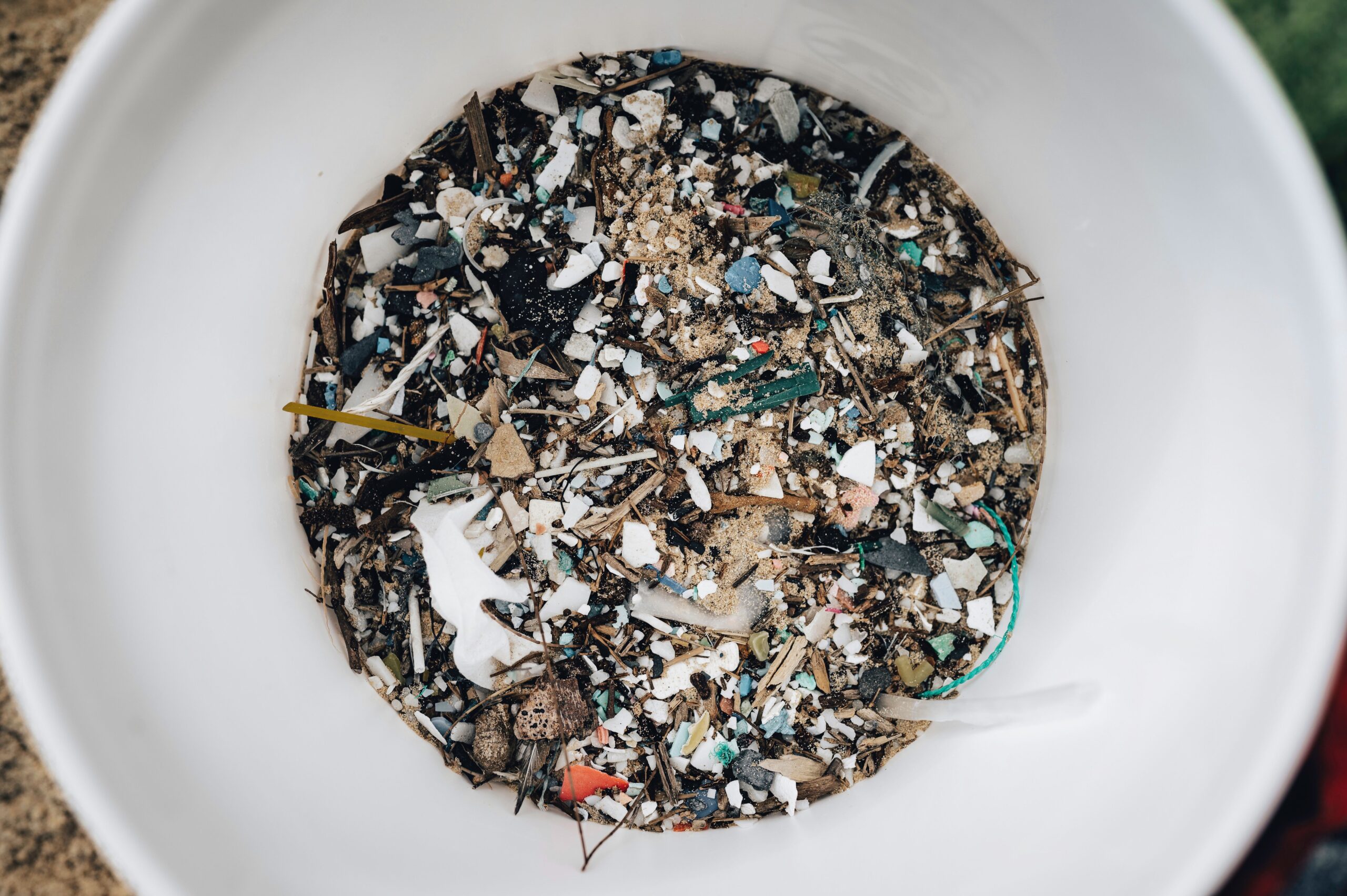
Plastics are generally considered chemically stable, which is why they are widely used in food packaging, water bottles and children’s toys. Their perceived safety is largely based on this property.
However, when larger plastic objects break down into microplastics and nanoplastics, their surface area increases significantly in proportion to their volume. This exposes much more of the material to the surrounding environment.
A new study conducted by researchers at Columbia University and the University of California, Berkeley, has found that these newly exposed surfaces may not be chemically harmless. The researchers also identified chemical mechanisms that could explain their potential to cause harm.
“As plastic fragments into smaller and smaller particles, its surface area increases enormously. Then microplastics change the water that surrounds them, generating high-energy, reactive radicals (reactive oxygen species, ROS) that very likely contribute to biological damage that we see in animals and potentially in humans as a result of microplastic exposure,” said Wei Min, a Columbia professor of Chemistry and Biomedical Engineering.
The work challenges the common view of microplastics as largely passive fragments of inert material and contributes to a growing understanding of why their widespread presence is a cause for concern. The research was published in the journal Nature.
This is particularly noteworthy for human health because human blood is largely made up of water. The new research suggests that microplastics entering the bloodstream or cells could remain chemically active in this water-rich biological environment.
How Microplastics Interact with Water to Generate Reactive Oxygen Species
Min’s group at Columbia University also led a 2024 study that developed a laser-based microscope technology. The researchers found that, on average, a litre of bottled water contained around 240,000 detectable plastic fragments, mostly nanometre-sized plastics known as nanoplastics. This was 10 to 100 times more fragments than previously estimated.
That study contributed to growing recognition that microplastics and nanoplastics exist throughout the food system.
The group’s 2024 research on nanoplastics attracted widespread media attention, and tackling microplastic pollution has become a public health priority. This year, the US federal government launched a $144 million programme to combat toxic microplastics in the human body. The US Environmental Protection Agency has also added microplastics to a federal list of contaminants that may pose a concern for drinking water, marking the first time microplastics have appeared on the list.
Subsequent research in prominent journals, including The New England Journal of Medicine, Nature Medicine and Nature Health, has found links between microplastic and nanoplastic exposure and heart attack, stroke, dementia and brain tumours. However, given their presumed inertness, the mechanisms through which microplastics could contribute to these illnesses had remained unclear.
The new study identifies a previously overlooked mechanism that could help bridge this gap.
“Our research found that when microplastics interact with water, as they do when they’re in bottled water, or when they’re absorbed into our bloodstream, they spontaneously generate what we call reactive oxygen species (ROS),” said Naixin Qian, a postdoctoral researcher in Wei Min’s lab who helped lead the research. “ROS are textbook examples of the kinds of molecules that can damage animal and human tissue.”
Explaining the role of water in the process, Min said: “Water is a key active player here, rather than just a spectator. It’s integral to making these microplastics reactive. Water molecules become chemically active when they come into contact with plastic, which is hydrophobic. Contact between the water and plastic creates an environment that facilitates electron transfer, and the formation of reactive radicals. When plastics fragment into smaller particles, their increasing surface-to-volume ratio creates more of these chemically active areas.”
The Columbia team conducted the chemical and biological experiments, while collaborators in the laboratory of Professor Teresa Head-Gordon at the University of California, Berkeley, developed theoretical calculations and dynamical simulations to identify how microplastics interact with water.
Head-Gordon’s laboratory led the theoretical work showing that hydroxide ions promoted into the immediate water layers near the hydrophobic microplastic interface can more easily lose an electron, creating hydroxyl radicals.
“Our fundamental work that the most hydrophobic microplastics interacting with water can drive chemical reactivity could ultimately lead to new engineering solutions by redesigning the chemistry of these commodity plastics to reduce the toxic outcomes on health and the environment,” said Head-Gordon.
What the Findings Could Mean for Human Health and the Environment
The researchers say the findings have implications for both environmental and human health, particularly because microplastics can form in everyday settings and enter aquatic environments.
“This work has significant implications for environmental and human health,” said co-author Beizhan Yan of Lamont-Doherty Earth Observatory. “In certain environments, such as discharges from plastic manufacturers and laundromats, microplastics can form and enter aquatic environments. This work also indicates that radicals can form on hydrophobic plastic surfaces in water, which could affect ecosystems and human health following exposure. In addition, various uses and processes in our daily lives can generate microplastics, including microwave heating, sunlight exposure of bottled water during storage. This foundational work provides a potential pathway for understanding their health impacts.”
Read More :
 Sridhar P