
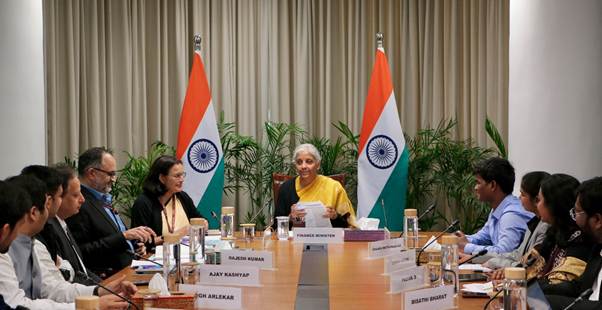
Finance Minister Nirmala Sitharaman has concluded a series of pre-budget consultations for the Union Budget 2027-28, bringing together more than 200 stakeholders from 13 sectors and stakeholder groups. The discussions, held between November 16 and 26, 2026, focused on policy recommendations to support economic growth, employment, innovation and inclusive development.
The consultations included representatives from industry associations, India Inc, academic institutions, expert groups, youth organisations and various professional sectors. The meeting with youth representatives was introduced as a new initiative this year.
Senior officials, including Anuradha Thakur, Secretary of the Department of Economic Affairs, Chief Economic Adviser Dr V. Anantha Nageswaran and other senior Ministry of Finance officials, also participated in the discussions.
13 Sectors Contribute to Budget Recommendations
The consultations covered a broad range of areas, including agriculture and rural development, manufacturing, MSMEs and startups, capital markets, banking and financial services, information technology, infrastructure, energy and sustainability.
Other participating groups represented employment and labour, housing and urbanisation, health and social issues, research and development, higher education, school education, vocational training, skilling, sports, youth affairs and economics.
The discussions generated recommendations aimed at strengthening India’s human capital, improving manufacturing competitiveness, supporting agricultural productivity, expanding housing security and improving educational outcomes.
Focus on Agriculture, AI and MSME Development
Among the key proposals was support for domestic manufacturing of biofertilisers and advanced biotechnology-based agricultural inputs. Stakeholders also recommended measures to improve India’s competitiveness in artificial intelligence through the development of sector-specific AI models optimised for locally available hardware.
Another area of focus was cybersecurity awareness among smaller businesses and financial institutions. Participants suggested programmes to strengthen cyber-hygiene practices among MSMEs and smaller financial institutions, which can face challenges in managing digital security risks.
The consultations also highlighted the need to help rural youth and workers move towards productive non-farm employment and sustainable enterprises.
Education, Affordable Housing and Urban Development
Education and housing featured prominently in the recommendations. Participants proposed a nationwide reading movement aimed at ensuring that every child can read and understand a newspaper by the end of Grade 5.
In the housing sector, stakeholders called for greater emphasis on rental housing as a way to expand affordable accommodation in urban areas.
They also recommended accelerating the development of Tier-2 and Tier-3 cities. Such efforts, they argued, could create more opportunities for young Indians transitioning from education into employment or entrepreneurship.
Government’s Consultative Approach to Budget-Making
The recommendations received during the consultations covered innovation-led growth, employment generation, social and economic infrastructure, and the development of a more resilient economy.
The pre-budget consultation process forms part of the government’s participatory approach to preparing the Union Budget. It allows representatives from different sectors and stakeholder groups to present their priorities and contribute to discussions on India’s economic direction.
The suggestions gathered during the meetings will feed into the broader budget-making process for the financial year 2027-28.
Read More :