
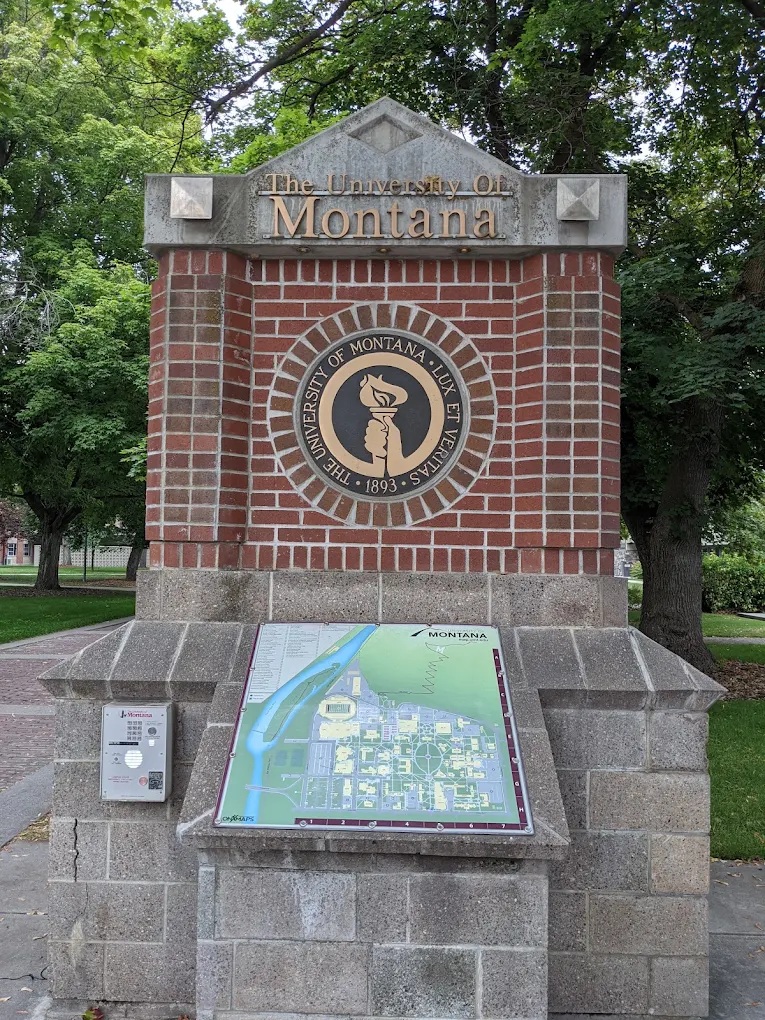
A social media attack on Indian academics at Montana State University has backfired after users highlighted their qualifications from leading Indian and US universities, turning an attempted political criticism into a debate over anti-Indian prejudice and the standing of India’s premier engineering institutions.
The controversy erupted as Montana Governor Greg Gianforte travelled to India for trade discussions, drawing criticism from some supporters of the Make America Great Again (MAGA) movement. Amid the online backlash against Gianforte’s visit, a social media account targeted Indian faculty members at Montana State University by highlighting their Indian educational backgrounds.
The post appeared intended to cast their Indian qualifications in a negative light. Instead, it prompted users to question why degrees from some of India’s most selective institutions were being presented as grounds for ridicule.
One post pointed out that Dilpreet Singh Bajwa, head of Montana State University’s Mechanical and Industrial Engineering Department, graduated from Punjab Agricultural University. Bajwa also earned his master’s and doctoral degrees from the University of Illinois.
IITs come under undue attack
Another highlighted Sreekala Bajwa, dean of the university’s College of Agriculture, noting her graduation from Kerala Agricultural University. Her academic qualifications also include a master’s degree from IIT Kharagpur and a doctorate from the University of Illinois.
The account also singled out Professor Shivali Banerjee for graduating from the Indian Institute of Technology Bombay, commonly known as IIT Bombay, and Professor Amalesh Jana for his educational background at IIT Guwahati and Jadavpur University. Jana subsequently earned his PhD from Oregon State University.
Rather than exposing any professional shortcomings, the posts drew attention to the academics’ credentials and international research training. Social media users questioned the premise that studying at leading Indian institutions was something to be ashamed of.
“How’s getting into IIT Bombay a bad thing,” one user asked.
“Imagine being so stupid that you think pointing out someone graduating from IIT Bombay is an insult!” another wrote.
A third user stressed the institution’s selectivity, saying students must be exceptionally capable to secure admission.
Others turned the criticism into a broader argument about the contribution of Indian talent to American universities and the economy. “Are you bragging US secured the best of best of india?” one commenter asked.
Another claimed that admission to IIT Bombay was more difficult than entry to Harvard or the Massachusetts Institute of Technology, while a separate commenter cited the success of IIT Bombay graduates in Silicon Valley to challenge the racial undertones of the attack.
The episode highlights the contradiction at the centre of the online backlash: Indian academics working at an American public university were criticised for qualifications that other users regarded as evidence of their academic achievement.
It also reflects a broader tension surrounding immigration and foreign talent in the United States, where political arguments about national identity and employment can spill over into attacks on professionals of Indian origin.
The governor’s trade visit provided the immediate political backdrop, but the controversy shifted attention to the Indian academics themselves. The online criticism, rather than undermining their credentials, prompted users to defend the standing of India’s premier technical institutions and question the assumptions behind the attack.
The episode does not establish that the criticism represents MAGA supporters as a whole. It does, however, illustrate how online political hostility can turn professional backgrounds and national origins into targets, even when the individuals concerned hold senior academic positions and have advanced qualifications from universities in both India and the United States.
 Sridhar P