
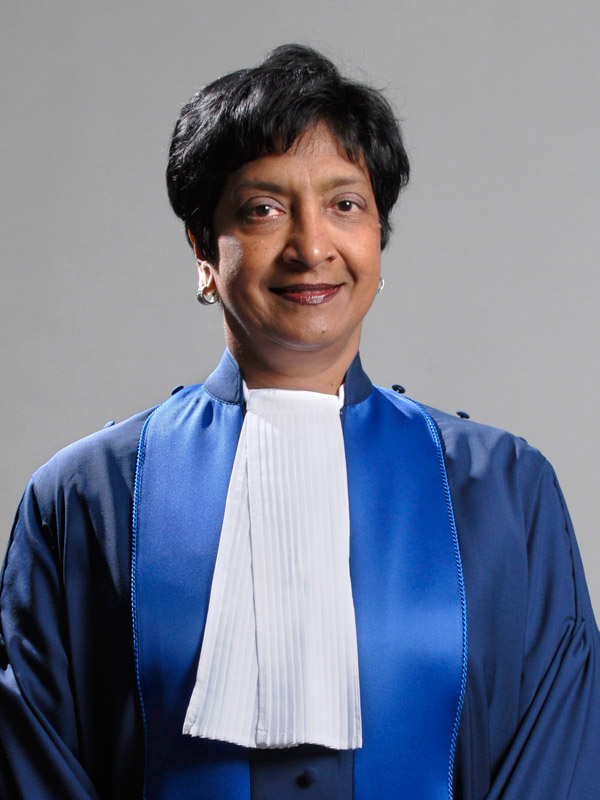
The detention of her husband by apartheid-era security police in 1971 became a defining episode in the legal career of Navi Pillay, the South African jurist who won the 2026 Nobel Peace Prize for her efforts to promote peace and international law.
Pillay represented her husband, Paranjothee Anthony “Gaby” Pillay, after authorities detained him under South Africa’s Terrorism Act. Her legal efforts helped expose allegations of torture and solitary confinement affecting political detainees, establishing an early foundation for a career devoted to human rights and accountability.
The Norwegian Nobel Committee announced Pillay as the 2026 laureate on October 9, recognising her contribution to strengthening the international legal order and ensuring that war crimes, crimes against humanity and genocide are prosecuted. The award has renewed attention to her early work challenging apartheid through the courts.
Pillay’s legal career began when South Africa’s racial segregation system restricted the rights and freedoms of the Black majority and other non-white communities. Working in an environment where the security apparatus wielded extensive powers against political opponents, she used legal proceedings to challenge detention practices and document allegations of abuse.
According to journalist Barbara Crossette’s 2022 profile of Pillay in Ms. Magazine, the case involving Gaby Pillay became an important turning point in her early legal practice.
Who Was Gaby Pillay?
Gaby Pillay was a South African lawyer who opposed apartheid and was married to Navi Pillay. The couple met while studying at the University of Natal and married in January 1965. They later adopted two daughters, Isvari and Kamini, according to Crossette’s account.
Their family life unfolded amid growing political repression. Gaby’s opposition to apartheid brought him under the scrutiny of the security police and affected his professional life.
In 1971, authorities detained him under the Terrorism Act, legislation used by the apartheid government against political opponents. Navi Pillay represented him while also defending other people prosecuted under the same law.
South African History Online records that Pillay represented 10 members of the Non-European Unity Movement charged under the Act in 1971. She had established her own legal practice in Natal in 1967, becoming the first Black woman to do so in the province.
The detention of her husband exposed her to the difficulties faced by lawyers seeking to protect people held by the security police. Political detainees could be isolated from their families and legal representatives, while allegations of mistreatment were difficult to establish against an administration determined to suppress opposition.
Pillay’s response was to pursue legal remedies that could document abuses and challenge the treatment of detainees beyond her husband’s individual case.
How His Detention Shaped Her Fight Against Torture
Pillay filed legal proceedings seeking to prevent the security police from torturing her husband. Evidence gathered through the process, including an affidavit detailing alleged mistreatment, subsequently helped bring the treatment of other political detainees into focus.
In her 2022 interview with Crossette, Pillay recalled that the authorities stopped using the methods described in the affidavit against her husband after it was filed.
The episode demonstrated how court proceedings could create a record of alleged abuses even when the government controlled the institutions responsible for enforcing the law. It also reinforced a central principle of Pillay’s later human-rights work: allegations of state misconduct had to be documented and tested through legal processes.
Her work extended beyond Gaby’s case. In 1973, she secured a significant victory concerning the rights of political prisoners on Robben Island, where Nelson Mandela and other anti-apartheid leaders were imprisoned. The legal fight helped establish prisoners’ access to lawyers and protections against disciplinary punishment without a proper hearing.
Recalling the victory, Pillay said the Rand Daily Mail had reported it under the headline, “The curtain has been lifted for the very first time on Robben Island.”
She subsequently defended Black Consciousness Movement activists Saths Cooper and Strini Moodley, continuing to represent people facing political persecution. Reflecting on the motivation behind her work, Pillay told Crossette: “You start by thinking, ‘I have to do something positive.’”
From Apartheid Courts to International Justice
Born in Durban on September 23, 1941, Pillay graduated from the University of Natal with a Bachelor of Arts degree in 1963 and a Bachelor of Laws degree in 1965. She later earned a Master of Law degree in 1982 and a Doctor of Juridical Science degree from Harvard Law School in 1988.
After the end of apartheid, Pillay was appointed an acting judge of South Africa’s High Court in 1995. The same year, she joined the International Criminal Tribunal for Rwanda, serving for eight years, including four as its president from 1999 to 2003.
Her work on the tribunal’s landmark Jean-Paul Akayesu case helped establish an international legal precedent recognising that rape and sexual violence could constitute acts of genocide when committed with the requisite intent.
Pillay subsequently served as a judge at the International Criminal Court from 2003 to 2008. In September 2008, she became the United Nations High Commissioner for Human Rights, a position she held until 2014.
During her tenure, she advocated for the protection of vulnerable populations, equality and accountability for human-rights violations. Her later international work extended the concerns that had defined her early practice in South Africa: protecting victims, establishing evidence of abuses and holding those responsible accountable.
The Nobel Committee’s October 9 announcement recognised Pillay’s contribution to international law and efforts to ensure the prosecution of grave international crimes.
Her career illustrates how a legal struggle that began under apartheid became part of a broader effort to strengthen international justice. Gaby Pillay’s detention did not alone determine the course of her wife’s career, but the case brought into sharp focus questions that would recur throughout her work: whether detainees could obtain legal protection, whether evidence could challenge official denials of abuse, and whether courts could safeguard human dignity when governments failed to do so.
 Arun Kumar N