
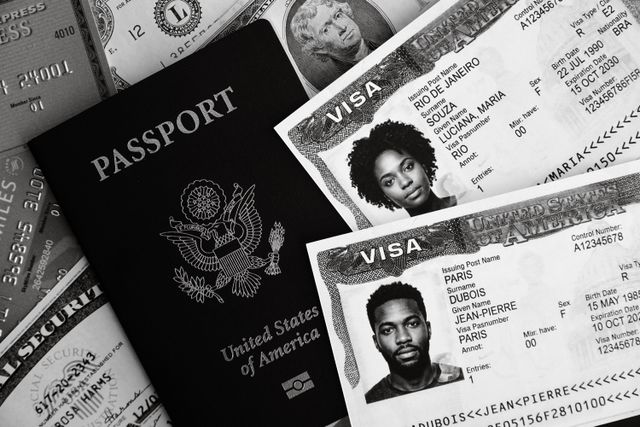
A US federal judge on November 17 blocked two directives that narrowed access to internships and other work placements for international students on F-1 visas. The ruling gives temporary relief to students whose universities award academic credit for practical training that is optional for their degree. Universities still decide whether individual placements qualify.
Judge Julia E. Kobick of the US District Court for the District of Massachusetts stayed two Student and Exchange Visitor Program directives issued on August 12 and August 24, 2026. The order said the directives “may not be enforced or applied pending judicial review.” The stay applies nationwide. A separate preliminary injunction bars the government from applying the disputed interpretation to the organisations that brought the case and their members, including their employees and students. That protection covers both future placements and conduct and approvals that predate the directives.
How the directives narrowed eligibility
Curricular Practical Training, or CPT, allows eligible F-1 students to undertake work placements that form part of their academic programmes. The August directives limited eligibility to training required of every student in a degree programme. An elective internship could therefore be excluded even if the university awarded academic credit for it.
The court illustrated the difference with a law student seeking credit for an externship with a federal judge. Under the August directives, the school could authorise the placement only if such an externship was required of every student pursuing the degree. The court said some institutions responded to the directives by denying or rescinding training authorisations and changing their curricula.
Four higher education organisations sued on October 5. They are the Association of American Universities, the Presidents’ Alliance on Higher Education and Immigration, NAFSA, and the Association of Independent Colleges and Universities in Massachusetts. They challenged the directives under the Administrative Procedure Act. The Presidents’ Alliance said the directives departed from a federal position that had stood for more than 35 years.
What the ruling means for Indian students
India was the largest source of international students in the United States in the 2025–26 academic year. The Open Doors report, released on November 16, counted 339,435 students from India, representing 29.6% of the international total. The previous year’s figure was 363,019. The new report counted 116,609 Indian graduate students and 39,711 undergraduates.
Another 182,201 Indians were participating in Optional Practical Training, a separate programme. Open Doors did not give a figure for the number of Indian students affected by the two CPT directives.
Universities are reviewing how to handle applications. The University of Michigan’s International Center asked students seeking approval for placements their degree does not require to wait for updated campus instructions before submitting new requests. It listed a processing time of one to two weeks for requests submitted through its system. The ruling is temporary. Students arranging an internship should check their university’s instructions and obtain school authorisation before starting work.
Read More :
 Srinivas Chakravarty
 Arun Kumar N