
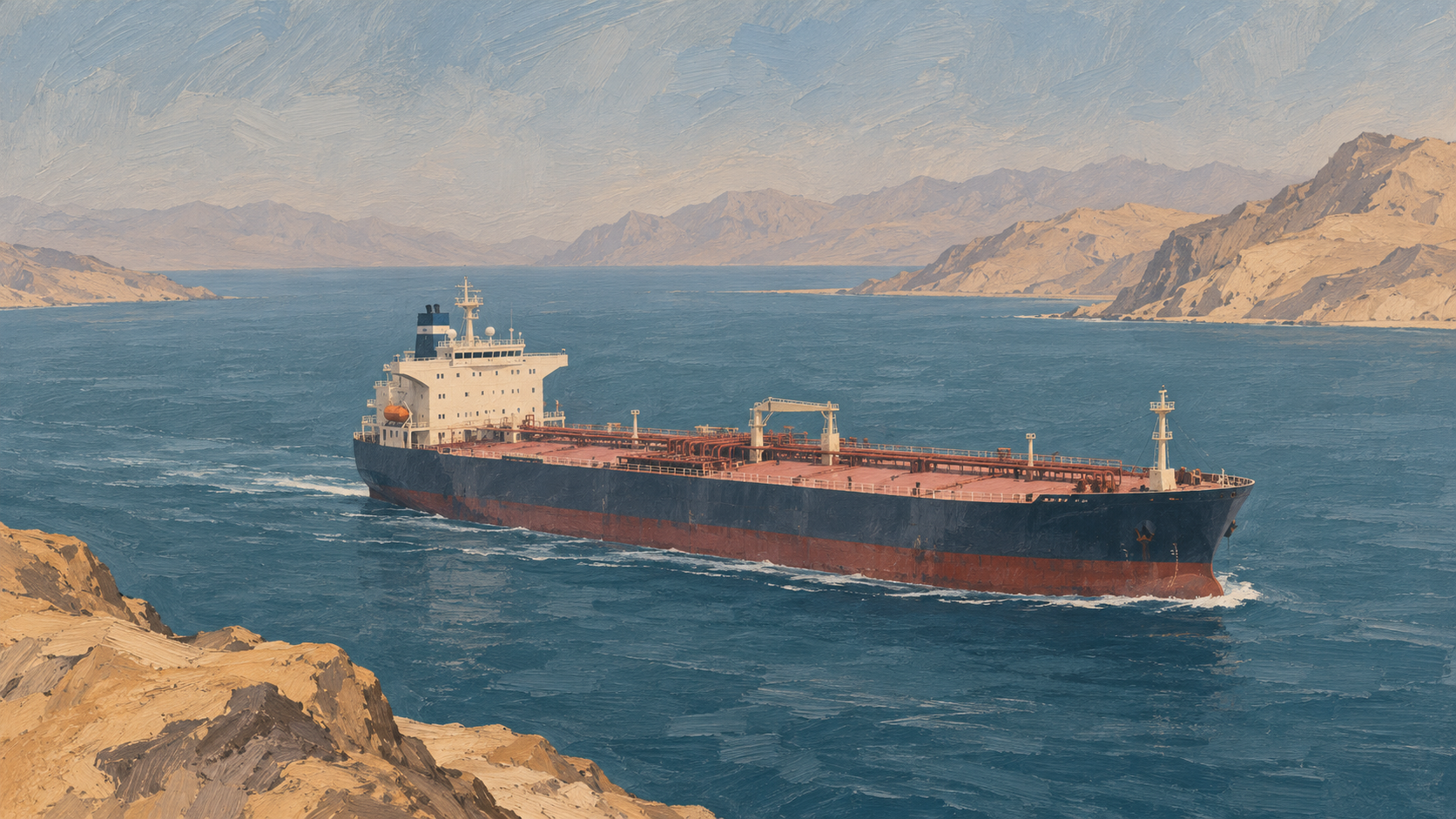
Three vessels were struck in the Strait of Hormuz late Monday, UK Maritime Trade Operations said on Tuesday, as Qatar sought to revive negotiations between Washington and Tehran. All three ships continued their journeys and all crew members were accounted for. The maritime agency reported strikes by unidentified projectiles. Iran’s Islamic Revolutionary Guard Corps said three oil tankers had hit mines and caught fire, a claim the Joint Maritime Information Centre said was unconfirmed.
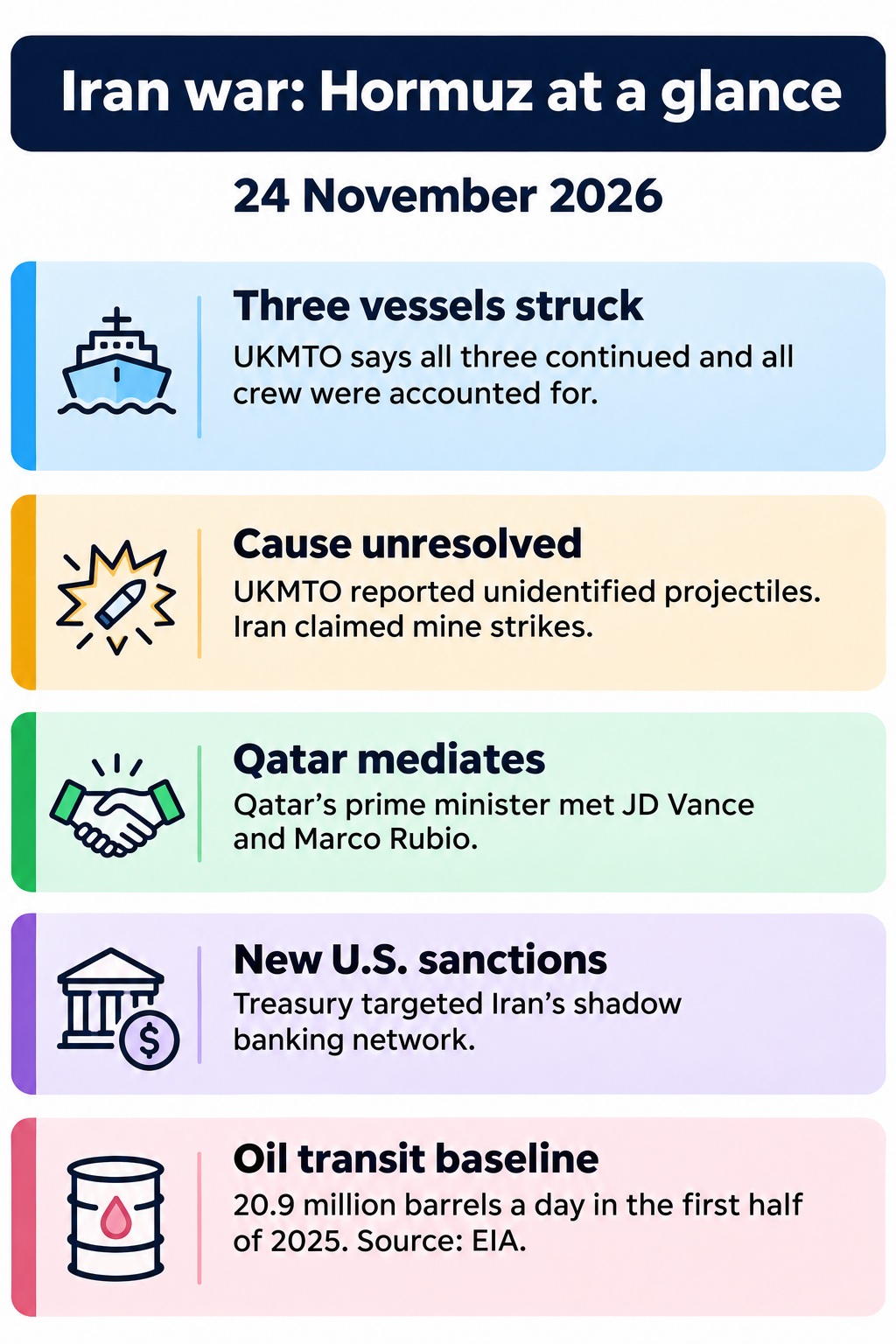
UKMTO said authorities were investigating and that the extent of damage and any environmental impact were unknown. The two accounts leave open whether they describe the same vessels. Neither establishes that the reported incidents halted commercial passage through the strait, one of the world’s most important routes for crude oil and liquefied natural gas.
Qatar presses for talks as Iran sets conditions
Qatari Prime Minister Sheikh Mohammed bin Abdulrahman Al Thani met U.S. Vice President JD Vance and Secretary of State Marco Rubio separately on Monday, the Associated Press reported. Mediators have explored easing disruptions to shipping in exchange for limited sanctions relief, with broader talks on Iran’s nuclear programme to follow. The meetings produced no publicly announced agreement.
Iranian parliament speaker and chief negotiator Mohammad Bagher Qalibaf said Tehran would refuse negotiations “until Iran’s seven conditions are met,” according to Iranian state television, cited by the AP. Reuters reported that Tehran’s demands include an end to hostilities, removal of the U.S. naval blockade and sanctions relief. Foreign Ministry spokesperson Esmaeil Baghaei said on Monday that Iran would use “all our tools to confront this US aggression,” according to Reuters.
The United States imposed its blockade on Iran-related oil exports on 13 April, lifted it in June after a draft understanding, and restored it on 14 July after that understanding collapsed, Reuters reported. On Monday the U.S. Treasury announced sanctions on more than two dozen exchange houses, front companies and individuals it said helped Iran move money through international financial networks. Treasury Secretary Scott Bessent called the network “the last financial lifeline of a bankrupt regime.”
The sequencing dispute remains central. A limited agreement on shipping could offer both governments a way to test compliance before addressing Iran’s nuclear programme. Tehran’s public demand that Washington meet its conditions before talks places the concessions Qatar is seeking to negotiate at the start of the process. India International Times previously reported on a draft framework linking maritime access and nuclear commitments.
What shipping and oil markets can verify
The U.S. Energy Information Administration estimates that 20.9 million barrels a day moved through Hormuz in the first half of 2025, equivalent to about one-fifth of global petroleum liquids consumption. That figure provides a pre-war baseline. Tuesday’s UKMTO notice gives the status of three vessels and their crews, while sustained changes in completed voyages and delivered cargoes would show whether the disruption is widening.
Reuters reported that expectations of ample global supply limited the rise in crude prices on Tuesday. It also reported that India and China were on track for record Russian crude imports this year, citing tanker data and industry sources. Those purchases help replace some disrupted supply. They leave Asian importers exposed to higher delivered costs if freight and insurance rise or Gulf cargoes face longer delays.
The immediate tests are whether investigators can identify what struck the vessels, whether operators report new delays or cancellations, and whether Doha can obtain a public commitment from both governments to resume talks. As of Tuesday, UKMTO had confirmed the three vessels continued their voyages, the cause remained unresolved and Qatar’s meetings had yielded no announced timetable for negotiations.
 Arun Kumar N