
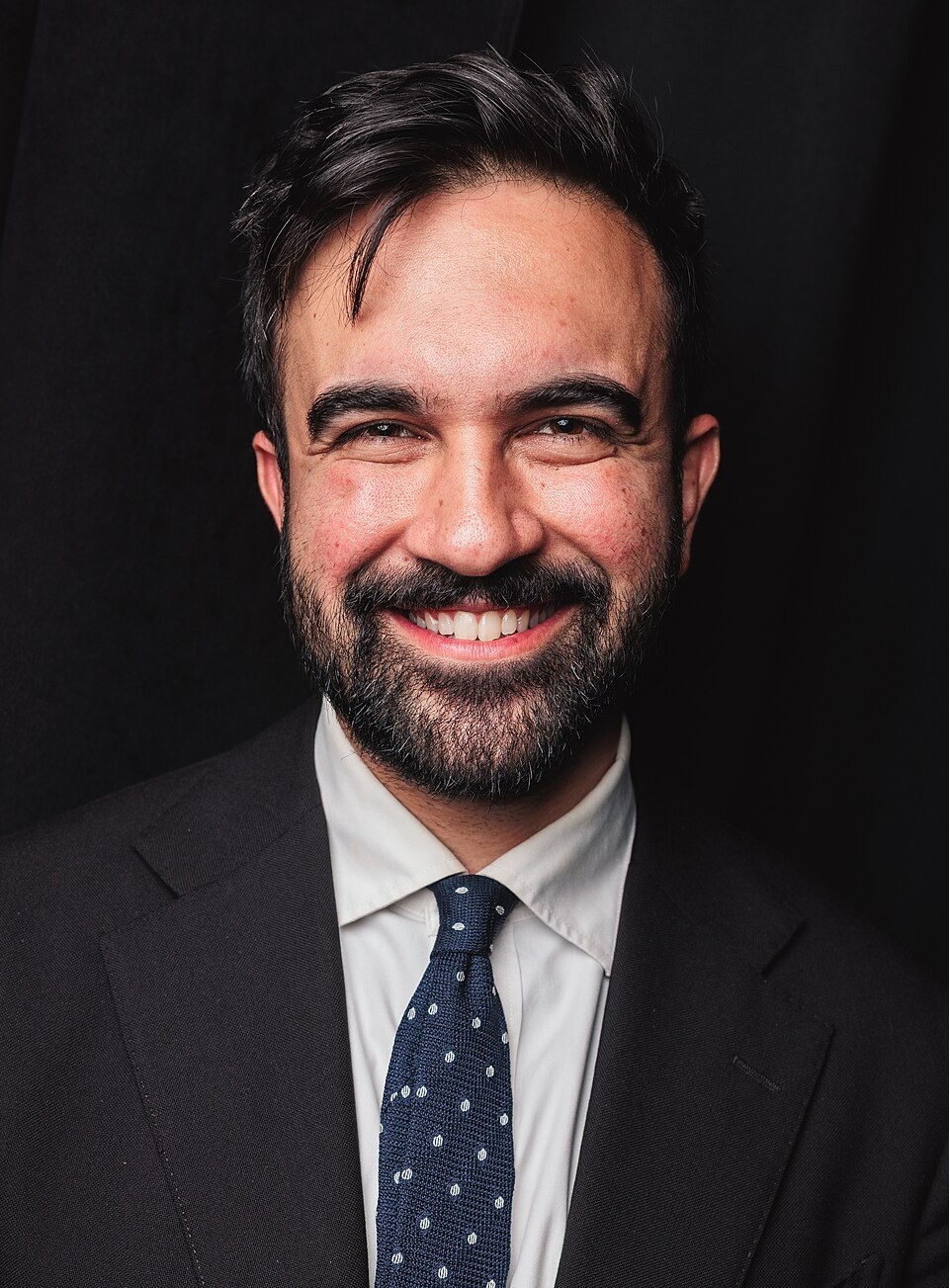
New York City Mayor Zohran Mamdani is moving to make lower vehicle speeds a central part of the city’s road-safety strategy, using powers granted under a 2024 state law to expand 15-mph and 20-mph slow zones while pairing them with street redesigns, automated enforcement and tighter controls on dangerous driving.
The administration’s most visible move so far is its expansion of 15-mph speed zones around schools. In March, Mamdani announced that every eligible school in New York City would eventually receive a 15-mph School Slow Zone during his first term. The city said more than 800 additional school locations would receive the lower limit during 2026, taking the total to nearly 1,300 by the end of the year. The longer-term target is 2,300 school locations covering about 3,200 schools.
By September, NYC Department of Transportation said more than 200 of those new 15-mph zones had already been installed, with about 800 expected to be operational by the end of 2026. The administration is also carrying out street redesigns around more than 300 schools this year.
The policy is part of a larger attempt to change how New York approaches traffic deaths: rather than treating crashes solely as a problem of individual driver behaviour, the city is increasingly focusing on road design, vehicle speeds and the physical environment in which crashes occur.
Sammy’s Law gives Mamdani wider speed-limit powers
The legal foundation for the strategy is Sammy’s Law, enacted by New York state in 2024.
The law gave New York City greater authority to lower speed limits to 20 mph on individual streets. It also allows 10-mph limits on certain streets undergoing safety-related redesigns. Before implementation, the city must provide advance notice and an opportunity for the relevant community board to comment.
The law was named after Sammy Cohen Eckstein, a 12-year-old Brooklyn boy who was killed by a speeding driver in 2013. Its passage gave the city a mechanism to move beyond the previous system in which lower speed limits were more constrained.
Under the city’s existing rules, the standard speed limit is 25 mph unless a different limit is posted. The city’s Neighborhood Slow Zone programme uses 20-mph limits in designated areas and combines them with traffic-calming measures.
Mamdani’s administration has accelerated the use of that authority.
In March, the city said it had lowered speed limits at just over 100 locations since Sammy’s Law took effect, including a regional slow zone in each borough. The administration said it would continue looking for opportunities to apply lower limits beyond schools.
That broader ambition is now attracting pressure from communities. According to Streetsblog New York City, 17 community boards representing more than two million residents had, by October 8, passed resolutions asking the administration to establish 20-mph slow zones across their neighbourhoods. More than 60 elected officials have also called for faster implementation.
The pressure matters because the mayor does not currently have unilateral authority to replace the city’s basic speed limit everywhere with 20 mph. Mamdani has said that a citywide change would require an amendment to the city’s administrative code by the City Council, and has said he would support such a change.
Schools are the first major testing ground
Schools have become the administration’s clearest testing ground for the slower-streets strategy.
The city is converting roughly 700 school locations that previously had 20-mph School Slow Zones to 15 mph, while establishing about 100 new 15-mph zones at schools where the previous limit was 25 mph. NYC DOT says the locations are being prioritised using safety data.
The administration argues that the difference between 15 mph and 25 mph is significant for pedestrians. NYC DOT says a pedestrian struck at 25 mph is more than three times as likely to suffer serious injury as one struck at 15 mph.
But Mamdani’s programme does not rely on speed-limit signs alone.
At the most dangerous school locations, NYC DOT is also installing measures designed to physically reduce vehicle speeds and improve visibility. These include speed humps, hardened daylighting and other intersection improvements.
In September, the city announced a redesign of Clarkson Street in Tribeca that will include wider pedestrian space, safer crossings, improved visibility and measures intended to slow vehicles. The project will also receive New York’s first gated Open Street outside a school.
The administration said the redesign is inspired by Paris’s “Rues aux Écoles” model, in which streets around schools are made safer and more pedestrian-oriented.
The city is also bringing back Open Streets for Schools for the 2026-27 academic year, with 77 school locations participating. In addition, permanent or substantial street-safety improvements are being undertaken around more than 300 schools.
Mamdani is going beyond speed-limit signs
The most significant part of the policy may be what the administration is doing alongside speed reductions.
On September 15, Mamdani unveiled “Vision Zero Reimagined”, a 10-year street-safety plan involving 19 city agencies and more than 100 policy commitments.
The plan calls for safety redesigns on untreated Vision Zero Priority Corridors — identified as some of the city’s most dangerous streets — within three years. It also calls for hardened daylighting or other safety treatments at a minimum of 1,000 intersections every year.
The city plans to expand pedestrian-priority areas, protected bicycle infrastructure and traffic-calmed corridors while continuing to use Sammy’s Law to lower speed limits.
The administration is also pursuing stronger enforcement against dangerous drivers, including measures aimed at vehicles using “ghost plates” and a new New York City “Super Speeder” programme enabled by changes to state law.
This is important because the Mamdani approach is not simply “lower the speed limit and issue more tickets”. It combines three separate interventions:
- Lower the legal speed.
- Redesign the road to encourage that speed.
- Target the drivers who continue to drive dangerously.
City fleet is being used as another safety test
Mamdani has also applied the same philosophy to government vehicles.
In July, he signed Executive Order 19 requiring pedestrian-alert systems and intelligent speed-assistance technology in new non-emergency municipal vehicles.
The city says about 4,000 existing municipal trucks will eventually be retrofitted with pedestrian-alert systems, with a target of June 2029. By June, 1,000 city vehicles had already been equipped with intelligent speed-assistance technology. According to the administration, those equipped vehicles had travelled more than 8 million miles and recorded a 64% reduction in dangerous speeding.
The technology does not simply function as a conventional speed camera. Intelligent speed assistance can limit vehicle acceleration once a vehicle exceeds the applicable speed limit or a speed threshold set by the city.
The larger question is whether slower streets can become the norm
Mamdani’s administration is therefore pursuing a gradual expansion rather than an immediate citywide 20-mph mandate.
The immediate focus is schools and selected neighbourhoods. The next layer is the redesign of dangerous streets and intersections. The longer-term objective, set out in Vision Zero Reimagined, is to make safer street design, lower speeds and enforcement part of the city’s normal transportation system.
The approach comes against a backdrop of New York’s existing Vision Zero programme. The mayor’s September plan says traffic deaths are down 30% compared with before Vision Zero began in 2014. In October, NYC DOT reported that pedestrian deaths in the first three quarters of 2026 had reached their lowest level since 1910, excluding the outlier year of 2020 during the COVID-19 pandemic.
Those figures do not establish that Mamdani’s speed-limit measures caused the decline — his administration inherited an existing Vision Zero system and the current-year figures cover only part of his first year. But they provide the context for his decision to expand rather than abandon the city’s road-safety strategy.
For New York, the policy question is now moving beyond whether speed limits should be lower in a few locations. With neighbourhood boards demanding 20-mph zones, hundreds of school zones being converted to 15 mph and a 10-year plan calling for thousands of street and intersection interventions, the emerging experiment is whether a city can systematically redesign its streets around survivability rather than vehicle speed.
 Sridhar P